
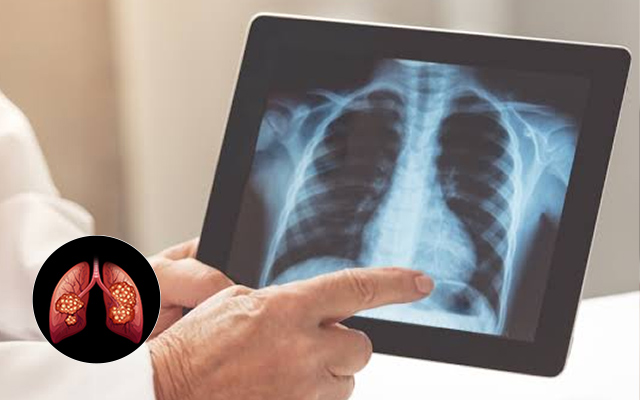
Low-dose palliative radiation therapy helps relieve persistent coughing, chest pain, and other distressing symptoms by shrinking tumours that press on or irritate nearby airways and chest structures, improving breathing and overall comfort.
A lung cancer doctor may recommend this treatment when advanced disease significantly affects breathing, sleep, speech, and everyday activities. Rather than aiming to cure the condition, this approach focuses on reducing tumour-related symptoms and improving quality of life.
By accurately targeting areas causing discomfort while protecting surrounding healthy tissue, it helps many patients remain more comfortable, active, and better able to continue their overall cancer care plan.
What Is Palliative Lung Radiation?
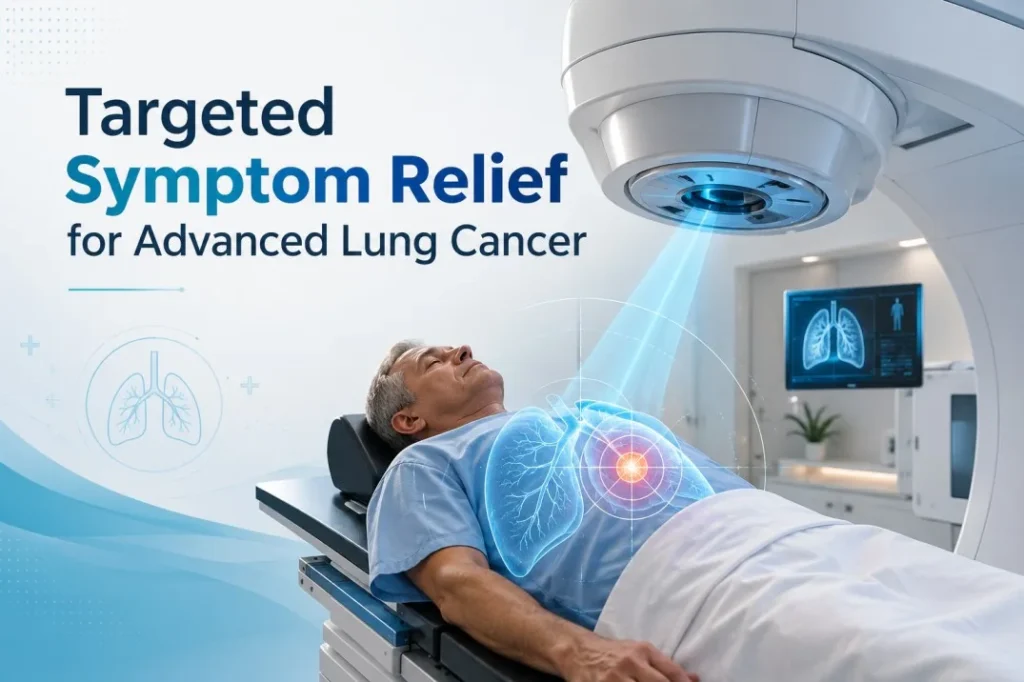
Palliative radiation is a targeted treatment that relieves symptoms caused by advanced lung cancer, such as persistent cough, chest pain, or breathing difficulty.
It forms an important part of lung cancer treatment options, helping improve comfort and daily quality of life without aiming to cure the disease.
How Is It Different From Curative Radiation Therapy?
While palliative radiation focuses on symptom relief and quality of life, curative radiation is delivered to eliminate cancer or achieve long-term disease control.
| Palliative | Curative |
| Relieves symptoms caused by the tumour | Aims to eliminate or control cancer long term |
| Improves comfort and quality of life | Seeks cure or prolonged remission |
| Targets areas responsible for symptoms | Treats all identified cancer sites as appropriate |
| Often uses shorter treatment schedules | Usually requires a longer, planned treatment course |
| Supports overall cancer management | Serves as the primary definitive cancer treatment |
Why Does Lung Cancer Cause Coughing and Chest Pain?
Lung cancer can cause coughing and chest pain when a growing tumour irritates the airways, chest lining, or nearby nerves. The severity depends on the tumour's size, location, and whether it blocks airflow or spreads to surrounding structures.
- Airway irritation can trigger a persistent or worsening cough.
- Blocked air passages may lead to breathlessness and repeated chest infections.
- Pressure on the chest wall or nerves can cause constant or movement-related pain.
- Involvement of the lung lining (pleura) may produce sharp pain, especially during deep breathing or coughing.
- Enlarged lymph nodes in the chest can further compress nearby tissues and contribute to symptoms.
How Does Low-Dose Radiation Relieve These Symptoms?
Low-dose advanced radiation therapy techniques relieve lung cancer symptoms by shrinking tumours that cause pressure, blockage, or irritation in the chest. As the tumour becomes smaller, symptoms such as coughing, chest pain, and breathlessness often improve, making daily activities more comfortable.
How Does It Help Reduce Coughing?
Radiation helps reduce coughing by shrinking tumours that irritate or block the airways. This relieves airway obstruction, reduces irritation, and makes breathing easier.
- Opens narrowed airways by reducing tumour size.
- Relieves pressure on the bronchial tubes.
- Reduces irritation that triggers the cough reflex.
- Helps improve airflow through the lungs.
- Makes speaking, sleeping, and breathing more comfortable.
How Does It Ease Chest Pain?
Radiation relieves chest pain by shrinking tumours that press on the chest wall, pleura, or nearby nerves. As pressure decreases, pain during breathing, coughing, or movement often becomes less severe.
- Reduces pressure on pain-sensitive tissues.
- Shrinks tumours invading nearby structures.
- Lowers inflammation around the affected area.
- Eases pain associated with deep breathing and coughing.
- Improves overall comfort and quality of life.
Who Is a Candidate for Palliative Lung Radiation?

Palliative lung radiation is recommended for people with locally advanced or metastatic lung cancer who have symptoms affecting their comfort or daily activities. Radiation therapy for metastatic lung cancer helps relieve tumour-related symptoms and is tailored according to the patient's condition, overall health, and treatment goals.
- Stage III or IV lung cancer that causes persistent cough, chest pain, breathlessness, or coughing up blood.
- Painful bone, spine, or brain metastases requiring symptom relief.
- Cancer unsuitable for curative surgery or definitive chemoradiation.
- Disease progressing despite chemotherapy, targeted therapy, or immunotherapy.
- Patients suitable for short-course or longer palliative radiation based on performance status and expected survival.
Consult a radiation oncologist to determine whether palliative lung radiation is right for you.
What Does the Treatment Process Look Like?
Palliative radiation for lung cancer follows a carefully planned process that focuses on symptom control while minimising treatment burden.
Every treatment plan is personalised according to the tumour location, symptoms, and the patient's overall condition.
Treatment usually involves:
- Initial consultation and clinical assessment
- CT simulation for treatment planning
- Precise radiation planning by the oncology team
- Delivery of radiation over one or more sessions
- Regular review of symptom improvement and side effects
How Many Sessions Are Typically Needed?
The total number of radiation sessions for lung cancer is kept short to maximise comfort. Common schedules may include:
- A single treatment session
- Short courses over 3 to 5 sessions
- Longer schedules of around 10 sessions, when clinically appropriate
How Long Does Each Session Take?
Palliative radiation sessions are short, painless, and completed on an outpatient basis, allowing patients to return home the same day.
- First planning session: 30 to 45 minutes (includes simulation and treatment planning).
- Radiation delivery: 2 to 5 minutes.
- Total visit: 15 to 30 minutes.
- Hospital stay: Not required.
- Sensation: Painless, similar to an X-ray.
How Soon Can Patients Expect Relief?
Some patients notice improvement within a few days, particularly if they have bleeding.
For symptoms such as chest pain, coughing, or breathlessness, relief is usually seen within 2 to 4 weeks as the tumour shrinks and inflammation decreases.
- Bleeding may improve within a few days to one week.
- Cough, chest pain, and breathlessness often improve within 2 to 4 weeks.
- The timing varies depending on the tumour's size, location, and response to treatment.
- Symptom relief may continue to improve even after treatment is completed.
What Are the Side Effects of Low-Dose Palliative Radiation?
Most palliative radiotherapy side effects are mild, temporary, and limited to the area being treated. Many patients tolerate treatment well, with symptoms usually improving within a few weeks after radiation is completed.
Common side effects include:
- Fatigue: The most common side effect, usually improving within a few weeks.
- Skin changes: Mild redness, dryness, or itching over the treated area.
- Hair loss: Occurs only in the specific area receiving radiation.
Side effects depend on the treatment area:
- Brain: Temporary hair loss, mild headache, or nausea.
- Chest or throat: Sore throat, heartburn, or temporary difficulty swallowing.
- Abdomen or pelvis: Nausea, vomiting, or diarrhoea.
How Does It Compare to Other Palliative Options (Medication, Surgery)?
Among palliative care lung cancer treatment options, radiation, medications, and selected surgical procedures each have different roles. The best approach depends on the patient's symptoms, tumour location, overall health, and treatment goals.
Quick Comparison of Common Palliative Treatment Options:
| Treatment | Primary Purpose | Best Used For | Limitations |
| Palliative radiation | Shrinks tumours causing symptoms | Persistent cough, chest pain, bleeding, airway obstruction | Relief may take days to weeks |
| Medications | Controls pain, cough, breathlessness, inflammation | Rapid symptom management | Does not reduce tumour size |
| Surgery or procedures | Relieves obstruction or manages complications | Selected patients with specific problems | Not suitable for everyone and may involve longer recovery |
In many cases, these treatments are combined to provide the best possible symptom control.
What Should Patients Ask Their Doctor Before Starting Treatment?
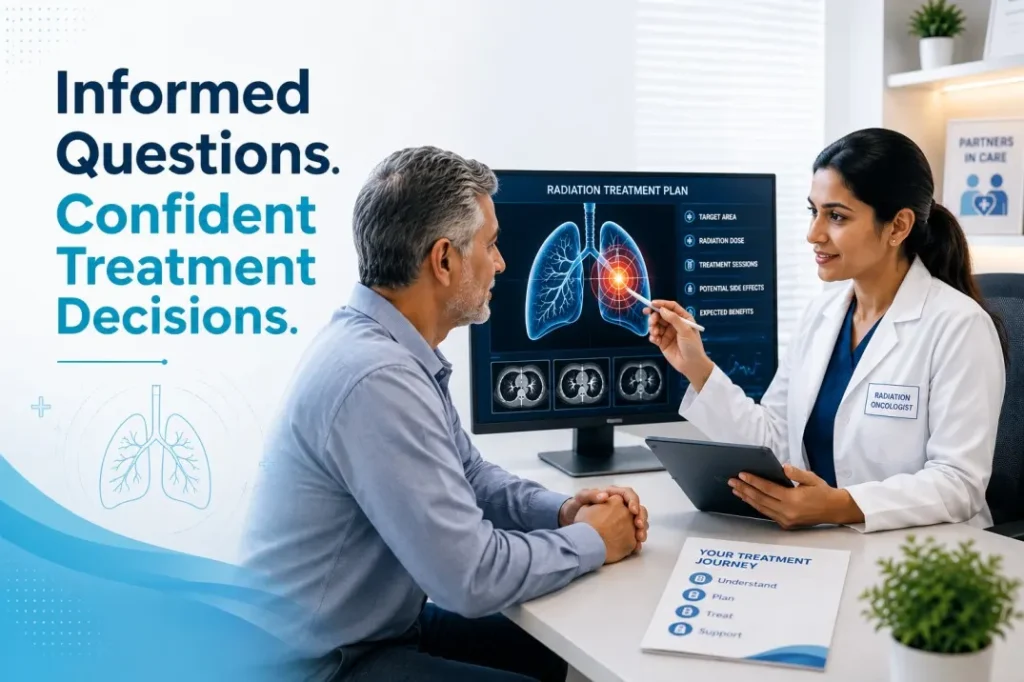
Consider asking:
- What symptoms is this treatment expected to improve?
- When am I likely to notice symptom relief?
- How many treatment sessions will I need?
- What side effects are most likely in my case?
- Can I continue my current medications during treatment?
- Will radiation be combined with chemotherapy, immunotherapy, or targeted therapy?
- How will my response to treatment be monitored?
- Who should I contact if my symptoms worsen?
H2: Key Takeaways
- Low-dose palliative radiation therapy shrinks lung cancers to relieve persistent cough, chest pain, breathlessness, and bleeding.
- Treatment is precise, painless, outpatient-based, and tailored to each patient's condition and goals of care.
- Most side effects are mild, temporary, and limited to the treated area.
Consult Dr Mukti Mukherjee, a radiation oncologist and palliative care specialist, and a trusted lung cancer doctor in Kolkata, for personalised treatment.
People Also Ask
How long does it take for radiation to relieve chest pain?
Chest pain may begin improving within 1 to 2 weeks after palliative radiation. Maximum symptom relief often develops gradually over several weeks, depending on the tumour.
Is low-dose palliative radiation painful?
No. Low-dose palliative radiation is painless during treatment. You lie still while the machine delivers radiation, and most sessions are completed within a few minutes.
What is the success rate of palliative radiation for lung cancer symptoms?
Palliative radiation relieves symptoms such as chest pain, cough, bleeding, or breathlessness in around 60% to 80% of patients, depending on the tumour and symptom severity.
How many radiation treatments are needed for symptom relief?
Treatment schedules vary, but symptom relief commonly requires 1 to 10 radiation sessions. Your radiation oncologist recommends the schedule based on your symptoms and overall condition.
Can palliative radiation shrink a lung tumor?
Yes. Palliative radiation can shrink lung tumours enough to reduce pain, bleeding, cough, or airway obstruction, although its primary goal is symptom control rather than cure.
Is palliative radiation the same as chemotherapy?
No. Palliative radiation targets specific tumour areas to relieve symptoms, while chemotherapy circulates throughout the body to treat cancer cells wherever they are located.
How is palliative radiation different from stereotactic body radiation (SBRT)?
Palliative radiation focuses on symptom relief using lower treatment intensity, whereas SBRT delivers highly precise, high-dose radiation with curative intent for selected early-stage tumours.
Can you have radiation more than once for lung cancer symptoms?
Yes. Some patients can safely receive repeat palliative radiation if symptoms return, depending on the previously treated area, total radiation dose, and overall health.