

Finding a breast lump can be alarming. While many breast masses are non-cancerous and linked to hormonal changes, cysts, or benign growths, every new or unusual lump deserves medical evaluation. Early diagnosis plays a vital role in identifying the cause and ensuring timely treatment if needed.
Breast Lump Warning Signs: Changes You Should Never Ignore
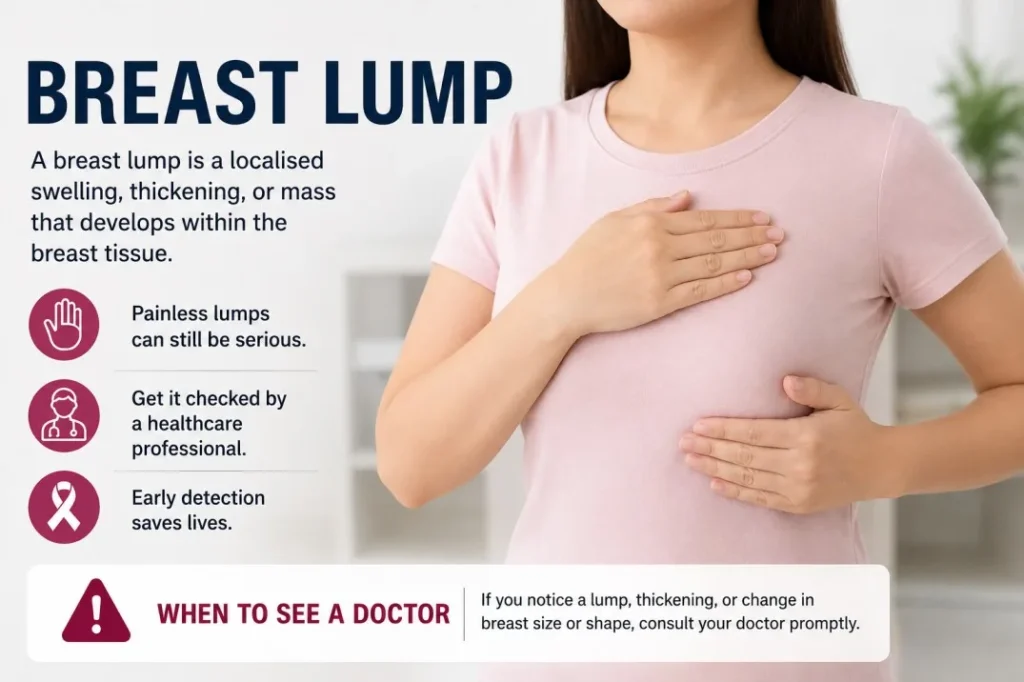
A breast lump can vary in size, texture, and location within the breast tissue. While many breast lumps are non-cancerous, any new or unexplained breast change should be evaluated by a healthcare professional.
Breast Changes You Should Never Ignore
- New lump or thickened area
- Changes in breast size or shape
- Skin dimpling or puckering
- Redness or thickening of the skin
- Orange-peel appearance of the breast
- Sudden nipple inversion
- Bloody or spontaneous nipple discharge
- Persistent pain in a specific area
- Swelling or a lump in the armpit
A healthcare professional should assess any persistent or unexplained breast change. Early evaluation can make a significant difference.
Does a Breast Lump Always Mean Cancer?
No. Most breast lumps are benign, meaning they are not cancerous. Many develop due to normal hormonal changes or non-cancerous breast conditions.
The challenge is that benign and cancerous lumps can sometimes feel similar. This is why imaging tests and clinical evaluation are necessary whenever a new lump is detected.
What Does A Cancerous Breast Lump Usually Feel Like?
A cancerous breast lump may be:
- Hard in consistency
- Irregular in shape
- Fixed to the surrounding tissue
- Painless in the early stages
- Persistent and progressively enlarging
However, there are exceptions. Some cancerous lumps may feel soft, while certain benign lumps may feel firm.
Common Causes of Non-Cancerous Breast Lumps
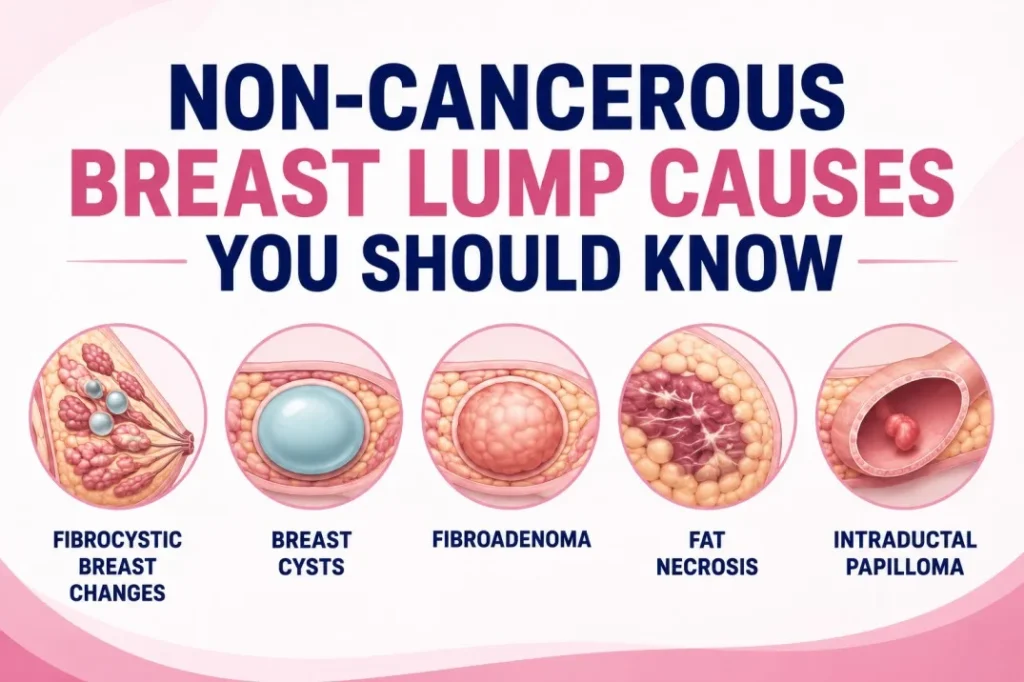
Fibrocystic Breast Changes
Hormonal fluctuations during the menstrual cycle can cause breast tissue to become lumpy, swollen, or tender. These changes often become more noticeable before periods and may improve afterwards.
Breast Cysts
Breast cysts are fluid-filled sacs that can vary in size. They may feel soft or firm and often become more noticeable during hormonal changes.
Fibroadenoma
Fibroadenomas are among the most common benign breast lesions, particularly in younger women. They are typically smooth, rubbery, painless, and move easily beneath the skin.
Fat Necrosis
An injury to the breast can sometimes lead to fat necrosis, where damaged fatty tissue forms a lump. These lumps may feel firm but are usually non-cancerous.
Intraductal Papilloma
These small growths develop inside the milk ducts, usually near the nipple. They may sometimes cause nipple discharge or bleeding.
When a Breast Lump May Need Specialist Care

Schedule an evaluation with a breast cancer doctor if:
- You discover a new breast mass
- A lump persists after your menstrual cycle
- The lump becomes larger or harder
- You experience nipple discharge
- There are visible skin changes on the breast
- You notice swelling in the armpit
- You have a strong family history of breast cancer
Prompt evaluation helps determine whether the lump is benign or requires further investigation. Consulting a breast cancer specialist early can prevent delays in diagnosis and improve treatment outcomes when necessary.
How Are Breast Lumps Diagnosed?
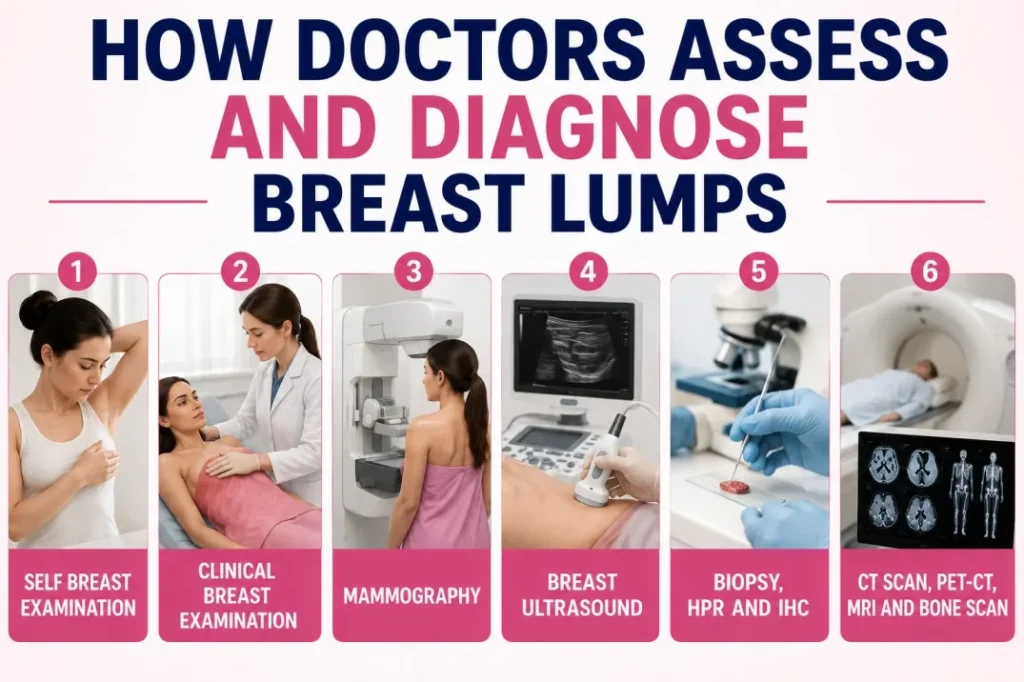
Breast lumps can be one of the symptoms of breast cancer and should be evaluated promptly. To accurately determine the disease's size, location, and stage, she follows a comprehensive diagnostic approach.
Self Breast Examination
Regular breast self-examination helps individuals become familiar with the normal look and feel of their breasts. Any new lump, thickened breast tissue, swelling, nipple changes, or skin abnormalities should be assessed by a doctor.
Clinical Breast Examination
A clinical breast examination is performed to evaluate breast changes, identify suspicious lumps, and assess any symptoms that may require further investigation.
Mammography
Mammography is one of the primary screening and evaluation tools used to detect breast abnormalities and investigate suspicious breast lesions.
Breast Ultrasound
Ultrasound provides additional information about breast abnormalities detected during screening or clinical examination and helps in further evaluation.
Biopsy, HPR, and IHC
A biopsy may be recommended to collect tissue from the breast mass for detailed analysis. Histopathological Report (HPR) and Immunohistochemistry (IHC) testing help confirm the diagnosis and identify the specific type of breast cancer.
CT Scan, PET-CT, MRI, and Bone Scan
Advanced imaging investigations such as CT scan, PET-CT, Magnetic Resonance Imaging (MRI), and bone scan may be used to determine the location, extent, and stage of breast cancer.
How is Treatment Planned After a Cancerous Lump Diagnosis?
Cancer Type
Identifies whether the tumour originates in the ducts or lobules and if it is invasive or non-invasive.
Tumour Size
Dictates surgical boundaries, helping clinicians decide between a localised lumpectomy and a full mastectomy.
Cancer Stage
Pinpoints how deeply the tumour has penetrated local tissue and if it has spread to lymph nodes.
Hormone Receptor Status
Confirm estrogen (ER) and progesterone (PR) sensitivity to determine if daily hormone-blocking pills will work.
HER2 Status
Identifies protein overexpression to see if aggressive, targeted biological therapies are required.
Patient Profile
Factors in age, underlying medical conditions, and genetic risks to ensure the body can safely tolerate treatments.
What Happens If A Breast Lump Is Diagnosed As Cancer?
Once the biological data points above are collected, the team assigns a clinical stage. This staging determines how far the disease has progressed and dictates the overall treatment strategy:
Stage 0 (Non-Invasive)
The cancer is confined strictly inside the ducts or lobules (Carcinoma in Situ) and has zero spread.
Early-Stage (Stage I–II)
The cancer is small and confined to the breast, or has spread minimally to nearby lymph nodes. Treatment outcomes are highest here, often requiring less extensive therapy.
Locally Advanced (Stage III)
The tumour is larger and has invaded surrounding tissues or multiple regional lymph nodes, requiring an aggressive combination of systemic therapies and surgery.
Metastatic (Stage IV)
The disease has spread through the bloodstream to distant organs, such as the bones, lungs, liver, or brain. Management shifts focus toward controlling disease spread, slowing progression, and optimising quality of life.
What Treatment Options May Be Recommended For A Cancerous Breast Lump?

Surgery
Surgery is often one of the primary treatment options for breast cancer.
- Lumpectomy: A lumpectomy removes the cancerous lump while preserving as much healthy breast tissue as possible.
- Mastectomy: A mastectomy involves removing the affected breast and may be recommended depending on the tumour size, location, or extent of disease.
Radiation Therapy
Radiation therapy uses carefully targeted high-energy radiation to destroy cancer cells that may remain after surgery. It is frequently recommended after breast-conserving surgery and may also be used in selected mastectomy cases.
Chemotherapy
Chemotherapy uses anti-cancer drugs to destroy rapidly dividing cancer cells. It may be administered before surgery, after surgery, or in advanced disease settings.
Hormone Therapy
Hormone therapy helps block the effects of hormones that fuel certain types of breast cancer.
Targeted Therapy
Targeted therapies specifically attack cancer cells with particular molecular characteristics while minimising damage to normal cells.
Immunotherapy
Immunotherapy strengthens the body's immune system to identify and fight cancer cells more effectively.
As a Consultant Radiation Oncologist and experienced breast cancer doctor in Kolkata, Dr Mukti Mukherjee specialises in evidence-based radiation therapy for breast cancer, helping improve treatment precision while reducing unnecessary radiation to nearby organs.
Who Is at Higher Risk of Developing a Cancerous Breast Lump?

- Age Over 50: Risk rises with age; median diagnosis age is 62.
- Genetic Mutations: Inherited mutations in BRCA1 or BRCA2 genes.
- Family History: A first-degree relative (mother, sister, daughter) diagnosed with breast cancer.
- Dense Breasts: High proportion of glandular/fibrous tissue vs. fatty tissue.
- Reproductive History: Early menstruation (before age 12) or late menopause (after age 55).
- Medical Interventions: History of chest radiation therapy or prolonged hormone replacement therapy (HRT).
- Lifestyle Factors: High alcohol intake, physical inactivity, and postmenopausal obesity.
It is important to remember that many women diagnosed with breast cancer have no obvious risk factors. This is another reason why every new breast abnormality deserves attention from a breast cancer doctor.
Key Takeaway: Breast Lumps and Early Detection
- Most breast masses are non-cancerous and may result from cysts, fibroadenomas, hormonal changes, or other benign breast conditions.
- A healthcare professional should assess any new, persistent, enlarging, or unusual breast lesions.
- Breast cancer may also present with nipple discharge, skin dimpling, nipple inversion, breast swelling, or changes in breast shape and size.
- Early detection improves treatment options, outcomes, and long-term survival.
- Clinical examination, mammography, ultrasound, and biopsy help identify the cause of a breast abnormality.
- Seeking medical evaluation promptly can support timely diagnosis and treatment when needed.
Don’t Ignore a Breast Lump— Act Now

Speak to a leading radiation oncologist for personalised and empathetic care.
People Also Ask
Can a breast lump be caused by hormonal changes?
Yes. Hormonal changes during menstruation, pregnancy, perimenopause, or menopause can sometimes make breast tissue feel lumpy, swollen, or tender. However, any new or persistent breast lump should still be evaluated by a doctor.
Are painful breast lumps usually cancerous?
Not necessarily. Many painful breast lumps are caused by cysts, hormonal fluctuations, or other benign breast conditions. While breast cancer lumps are often painless, pain alone cannot determine whether a lump is cancerous or non-cancerous.
Can a breast lump move under the skin?
Yes. Some benign breast lumps, such as fibroadenomas, may feel smooth and move easily under the skin. However, the way a lump feels is not enough to determine its cause, which is why medical evaluation is important.
Can young women develop breast lumps?
Yes. Breast lumps can occur at any age. In younger women, they are often linked to non-cancerous conditions such as fibroadenomas or breast cysts. Even so, every new breast lump should be assessed by a doctor.
Can men develop breast lumps?
Yes. Although breast lumps are more common in women, men can also develop them. Causes may include hormonal changes, benign breast conditions, or, in rare cases, breast cancer. Any unexplained lump should be medically evaluated.
Does breast cancer always cause a lump?
No. Some people with breast cancer may notice symptoms such as nipple changes, skin dimpling, breast swelling, redness, or unusual nipple discharge before a lump becomes noticeable.
What happens during the first breast lump consultation?
The breast cancer specialist reviews your symptoms, medical history, and any family history of breast cancer. A clinical breast examination may be performed, and further investigations such as mammography, ultrasound, or biopsy may be recommended if required.