
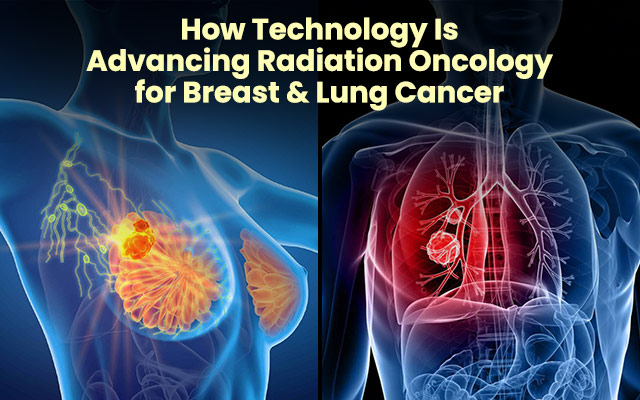
Radiation therapy has changed dramatically over the past decade. Doctors no longer rely on broad, generalised beams that treat a wide area of the body. Instead, they use precise, image-guided technology that targets tumours directly and spares healthy tissue around them. This shift matters most for breast and lung cancer patients, where nearby organs like the heart and lungs need extra protection during treatment.
This blog explains the advanced technology driving these changes and what you can expect if your doctor recommends radiation therapy for breast or lung cancer.
What Is Radiation Therapy and How Does It Work?
Radiation therapy uses high-energy rays to destroy cancer cells or stop them from multiplying. Doctors direct these rays at the tumour while limiting exposure to surrounding healthy tissue. The rays damage the DNA inside cancer cells, which stops them from growing and eventually causes them to die.
Oncologists plan each session carefully. They study scans, mark the exact area to treat, and calculate the right dose — a process that has improved significantly because of new imaging and delivery technology.
Why Has Radiation Therapy Evolved So Much in Recent Years?
Older radiation techniques treated a fixed area with a uniform dose. This approach worked, but it often affected nearby healthy organs and caused more side effects. Newer technology changes this by shaping the radiation beam around the tumour's exact contours.
Three factors pushed this evolution forward: better imaging tools that show tumours in real time, software that calculates precise doses, and machines that adjust beam shape and intensity during treatment. Together, these advances let doctors treat tumours more accurately while protecting organs like the heart, lungs, and ribs.
What Advanced Technologies Are Used in Breast Cancer Radiation Therapy?
Breast cancer radiation therapy has seen major upgrades, especially in techniques that protect the heart and reduce overall treatment time.
How Does IMRT Improve Precision in Breast Cancer Treatment?
Intensity-Modulated Radiation Therapy (IMRT) shapes the radiation beam to match the exact contour of the breast tissue. Instead of one uniform dose, IMRT varies the intensity across the treatment area, which reduces exposure to the heart and lungs. Many oncologists now consider IMRT standard practice in breast cancer radiation therapy.
What Role Does Deep Inspiration Breath Hold (DIBH) Play in Protecting the Heart?
DIBH asks patients to hold a deep breath during treatment. This simple action moves the chest wall away from the heart, creating distance between the heart and the radiation beam. The technique works particularly well for left-sided breast cancer, where the heart sits closest to the treatment area. Doctors use breathing sensors and imaging to confirm the right position each session, which significantly reduces cardiac exposure.
How Is Partial Breast Irradiation Reducing Treatment Time?
Partial breast irradiation treats only the area around the tumour site instead of the entire breast. This suits certain early-stage cancers and can shorten treatment from several weeks to just a few days, meaning fewer hospital visits and less disruption to daily life.
What Advanced Technologies Are Used in Lung Cancer Radiation Therapy?
Lung tumours move constantly as patients breathe, which makes precise targeting difficult. New technology solves this challenge in several ways.
How Does SBRT Target Lung Tumours More Accurately?
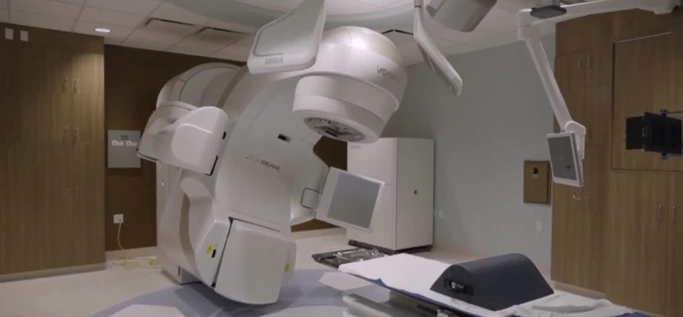
Stereotactic Body Radiotherapy (SBRT) delivers high doses of radiation in just a few sessions, sometimes as few as three to five. The technique uses multiple precisely angled beams that converge on the tumour, delivering a strong dose while minimising exposure to surrounding lung tissue. SBRT works especially well for early-stage lung cancer and for patients who cannot undergo surgery.
How Does 4D-CT Imaging Account for Breathing Movement During Treatment?
4D-CT imaging captures how a tumour moves throughout the breathing cycle, not just a single snapshot. Doctors use this data to map the tumour's full range of motion, ensuring the radiation beam stays accurate even as the lung expands and contracts.
Can Image-Guided Radiation Therapy (IGRT) Reduce Damage to Healthy Lung Tissue?
IGRT takes imaging scans immediately before, and sometimes during, each session. These images confirm the tumour's exact position and let the care team make small adjustments before delivering radiation, reducing the chance of missing the target or damaging nearby healthy lung tissue.
What Are the Benefits of These Technological Advances for Patients?
Patients gain real advantages from these newer techniques: shorter schedules for many early-stage cancers, reduced damage to the heart, lungs, and surrounding organs, fewer side effects such as fatigue and skin irritation, higher accuracy despite tumour movement, and better long-term outcomes from targeted dose delivery. These benefits make treatment more manageable for patients balancing cancer care with daily life.
Are There Fewer Side Effects With Modern Radiation Techniques?
Yes, in most cases. Precision techniques like IMRT, DIBH, and IGRT reduce radiation exposure to healthy organs, lowering the risk of complications such as heart problems after breast cancer treatment or lung inflammation after lung cancer treatment. Side effects still vary by cancer stage, treatment area, and overall health, so your radiation oncologist will walk you through the specific risks for your plan.
How Does a Radiation Oncologist Decide Which Technology Is Right for You?
Doctors weigh the type and stage of cancer, the tumour's exact location and size, whether nearby organs need extra protection, the patient's overall health, and results from imaging scans and biopsy reports. This individualised planning ensures each patient gets a plan suited to their diagnosis, not a one-size-fits-all approach.
What Should You Expect During a Modern Radiation Therapy Session?
Most sessions take only a few minutes, though appointments often run longer because of positioning and imaging checks beforehand. The treatment itself does not hurt, though you need to stay still while the machine delivers radiation from different angles.
Breast cancer patients using DIBH practise the breath-hold technique before treatment begins. Lung cancer patients undergoing SBRT may have longer sessions due to the precision imaging involved, but their total number of visits is often much lower than with traditional schedules.
How Is the Future of Radiation Therapy Shaping Up for Breast and Lung Cancer Patients?
Radiation oncology continues to advance quickly. Researchers are developing adaptive radiotherapy, which adjusts the treatment plan in real time based on daily changes in tumour size or position. Artificial intelligence is also starting to assist with treatment planning, helping doctors calculate doses faster and more accurately. These developments point toward shorter courses, fewer side effects, and more personalised care ahead.
Frequently Asked Questions
Is radiation therapy painful?
No, radiation therapy does not cause pain during the session. Some patients experience skin irritation or fatigue afterward, depending on the treatment area.
How many radiation therapy sessions are needed for breast cancer?
This depends on the technique used. Traditional schedules run for several weeks, while partial breast irradiation can shorten treatment to about five days.
How many sessions are needed for lung cancer radiation therapy?
SBRT typically requires three to five sessions, while conventional radiation therapy may involve several weeks of daily treatment.
Does radiation therapy cause hair loss?
Radiation therapy only affects hair in the treated area, so breast or lung radiation does not cause scalp hair loss.
Can radiation therapy cure lung cancer completely?
For early-stage lung cancer treated with SBRT, radiation therapy can achieve excellent local control and, in many cases, long-term remission. Your oncologist can explain the outlook for your specific diagnosis.
What is the difference between IMRT and SBRT?
IMRT modulates beam intensity across a treatment area and is often used for breast, head, and neck cancers. SBRT delivers very high doses in fewer sessions and suits small, well-defined tumours like early-stage lung cancer.
Is radiation therapy safe for the heart during breast cancer treatment?
Modern techniques like IMRT and DIBH significantly cut radiation exposure to the heart, making treatment considerably safer than older methods, especially for left-sided breast cancer.
How long does it take to recover after radiation therapy?
Most patients resume normal activities within a few days to weeks, as fatigue and skin sensitivity improve gradually.
Can radiation therapy be combined with chemotherapy or surgery?
Yes. Doctors often combine it with surgery or chemotherapy depending on the cancer type and stage, coordinating the plan with your broader treatment team.
How much does advanced radiation therapy cost in India?
Costs vary based on the technique, number of sessions, and hospital. Consult your radiation oncologist's clinic directly for an accurate estimate.
Conclusion: Why Choosing the Right Radiation Oncologist Matters
Advanced radiation therapy technology has transformed cancer care for breast and lung cancer patients. Techniques like IMRT, DIBH, SBRT, 4D-CT imaging, and IGRT let doctors target tumours with remarkable precision while protecting healthy organs, translating into shorter schedules, fewer side effects, and better outcomes overall.
If you or a loved one needs breast cancer radiation treatment in Kolkata or wants to explore lung cancer treatment options, working with an experienced radiation oncologist makes a real difference. For patients managing persistent cough and chest pain, palliative lung radiation can also provide meaningful relief. And if you have found a new lump, don't wait — consult a breast cancer doctor promptly, since early evaluation often leads to better outcomes.
Dr Mukti Mukherjee offers comprehensive radiation therapy services in Kolkata, using advanced, personalised treatment planning for breast, lung, and other cancers. Book a consultation to discuss the right approach for your diagnosis.