
Can one small pouch of tobacco really lead to cancer? Yes. That daily habit—be it smoking or chewing—may be slowly rewriting the health of your cheeks.
Cheek cancer is one of the fastest-rising oral cancers linked to tobacco use. What starts as a harmless chew or occasional smoke can slowly turn deadly.
This blog uncovers how tobacco damages your oral cavity and the signs you shouldn’t ignore. Learn why early care from an expert like Dr. Mukti Mukherjee, a leading oncology doctor in Kolkata, could be life-saving.
What is Cheek Cancer?
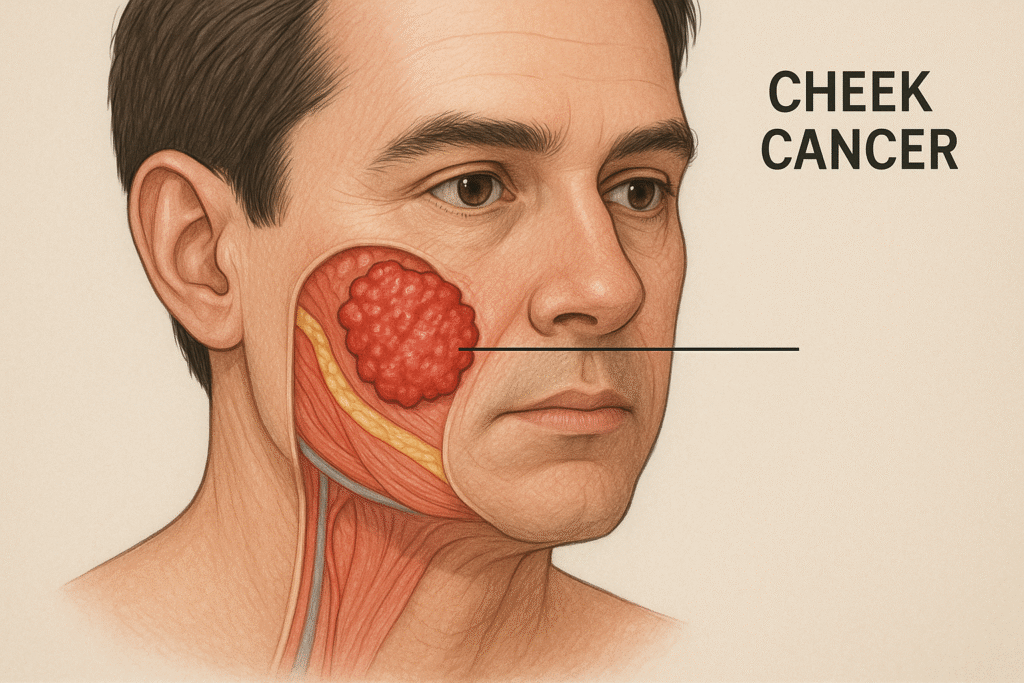
Cheek cancer, also known as oral cavity cancer of the buccal mucosa, begins in the inner lining of your cheeks. This tissue is soft, thin, and highly vulnerable to irritants, especially those found in tobacco products.
Among all types of oral cancers linked to smoking, cheek cancer is the most common in India. The reason? A high rate of smokeless tobacco use, such as gutka, khaini, and paan with zarda.
How Smoking and Chewing Tobacco Trigger Cheek Cancer
Carcinogens in Tobacco Products
Tobacco contains over cancer-causing chemicals, including:
- Nitrosamines
- Formaldehyde
- Arsenic
- Polycyclic aromatic hydrocarbons
These carcinogens directly damage DNA in your cheek cells.
Impact of Smoking on Oral Tissues
When you smoke:
- Heat and chemicals irritate the cheek lining
- Blood vessels shrink, slowing healing
- Damaged cells multiply abnormally over time
This creates the perfect setup for cancer development.
Smokeless Tobacco? Just as Dangerous
Holding chewing tobacco or gutka in the cheek keeps harmful chemicals in contact for hours. This leads to:
- Chronic inflammation
- Tissue breakdown
- Precancerous changes like leukoplakia and erythroplakia
The result? Higher risk of cheek cancer and tobacco use-related complications.
Who Is at Higher Risk?
You may be at greater risk if you:
- Smoke more than 10 cigarettes a day
- Chew tobacco multiple times daily
- Use both forms of tobacco
- Mix alcohol with tobacco
- Have poor oral hygiene or chronic ulcers
Genetics, age, and family history can also play a role, but tobacco remains the leading cause of cheek cancer.
Early Signs of Cheek Cancer in Smokers
Spotting cancer early increases survival dramatically. Look out for:
- A persistent sore inside the cheek
- White or red patches that do not go away
- A lump or thickening in the cheek
- Numbness or burning sensation
- Difficulty chewing or moving the jaw
- Swelling in the face or neck
These cheek cancer symptoms in smokers may seem minor, but ignoring them can be fatal.
How is Cheek Cancer Diagnosed?
A timely visit to a specialist like Dr. Mukti Mukherjee, a renowned oncology doctor in Kolkata, can make all the difference.
Diagnosis may include:
- Oral examination with a scope
- Biopsy of the lesion
- Imaging tests (MRI, CT scan) to assess the spread
- Staging to guide treatment options
If caught in Stage I or II, cheek cancer is often curable with local treatment.
Treatment for Cheek Cancer
Treatment depends on stage, size, and patient health. Options include:
Surgery
- Removes cancerous tissues from the cheek
- May involve jawbone or lymph node removal if spread
Radiation Therapy
- Targets cancer cells using high-energy beams
- Often used post-surgery or for non-surgical cases
Chemotherapy
- Kills remaining cancer cells
- Typically used in advanced or inoperable cases
Advanced centres like those led by Dr. Mukti Mukherjee offer precise, multi-modal care that improves survival and reduces side effects.
Importance of Early Detection
Early detection of oral cancers improves cure rates and quality of life.
Detected early, survival for cheek cancer can be:
- Extremely High in Stage I
- High in Stage II
- Drops to low in advanced stages
This is why you should never ignore oral changes, especially if you use tobacco.
Can Quitting Tobacco Help?
Absolutely. Here’s how quitting helps even after diagnosis:
- Slows cancer progression
- Improves treatment response
- Reduces the risk of recurrence
- Prevents second cancers
- Enhances surgical healing and recovery
The body begins to repair damaged tissues almost immediately after quitting.
Prevention Tips for Smokers
Want to lower your cancer risk? Start with these:
- Quit all tobacco forms—smoking, chewing, gutka, khaini
- Avoid alcohol or limit intake
- Maintain oral hygiene and visit a dentist yearly
- Get screened regularly by an oncology doctor in Kolkata
- Stay alert to mouth sores, swelling, or numbness
Early lifestyle changes reduce the risk of developing oral cavity cancer significantly.
The Role of Dr. Mukti Mukherjee
If you’re a smoker—or even a former one—routine oral checks are crucial.
Dr. Mukti Mukherjee, a trusted name in radiation and oncology care in Kolkata, offers:
- Clinical exams for oral pre-cancer or cancer
- Diagnostic testing and staging
- Effective treatment options
- Counselling to quit tobacco
- Long-term follow-up and support
Patients across Kolkata and West Bengal trust her experience and personalised approach to cancer care
Oral Cancer Awareness for Smokers: What Needs to Change
It’s time to shift the narrative from fear to action.
- Smokers need better awareness
- Chewers need early screening
- Society needs more oral cancer education
- Survivors need support to stay cancer-free
Dr. Mukti Mukherjee is leading this shift in Kolkata, one diagnosis at a time.
Your Smile, Your Life: Keep Them Both
Cheek cancer can silently grow behind your smile. But with awareness, early detection, and expert care, it doesn’t have to win.
Even if you’ve been using tobacco for years, it’s never too late to protect your oral health. Let your next step be a proactive one.
Book a Screening with an Oncology Doctor in Kolkata Today
If you smoke or chew tobacco, get checked now by Dr. Mukti Mukherjee, a leading Oncology doctor in Kolkata.
People Also Ask
- Can you get cheek cancer without smoking?
Yes, but tobacco use increases the risk exponentially. Other risk factors include alcohol, HPV, and poor oral hygiene.
- How soon can tobacco cause cheek cancer?
Cheek cancer may develop after years of exposure, but precancerous changes can appear much sooner.
- Is gutka worse than smoking?
Yes. Gutka sits directly in contact with your cheek tissue, releasing carcinogens for extended periods.
- Can cheek cancer be treated without surgery?
In some early cases, radiation or chemotherapy may work. However, many require a combination approach.
- Does smokeless tobacco cause cheek cancer faster than cigarettes?
Yes. Since smokeless tobacco sits in direct contact with cheek tissue, it causes faster and more concentrated damage.
- Can cheek cancer be reversed in early stages?
If caught early, some precancerous lesions can be reversed by quitting tobacco and seeking medical treatment.
- How long does it take for cheek cancer to develop from tobacco use?
Cheek cancer often develops over several years, but damage can start within months of consistent use.
- What does cheek cancer look like in the early stages?
It may appear as white or red patches, thickened cheek lining, or non-healing sores.
- Is cheek cancer painful in the beginning?
Not always. Early cheek cancer might be painless, which is why it often goes unnoticed.
- What increases the risk of cheek cancer besides tobacco?
Alcohol use, poor oral hygiene, sharp teeth, HPV infection, and prolonged sun exposure (for the lip area) can also raise the risk.