
Lung Cancer
Dr. Mukti Mukherjee
[12+ Years Experience]
Radiation Oncologist In Kolkata
Home / Treatments / Lung Cancer
Lung Cancer Doctor in Kolkata
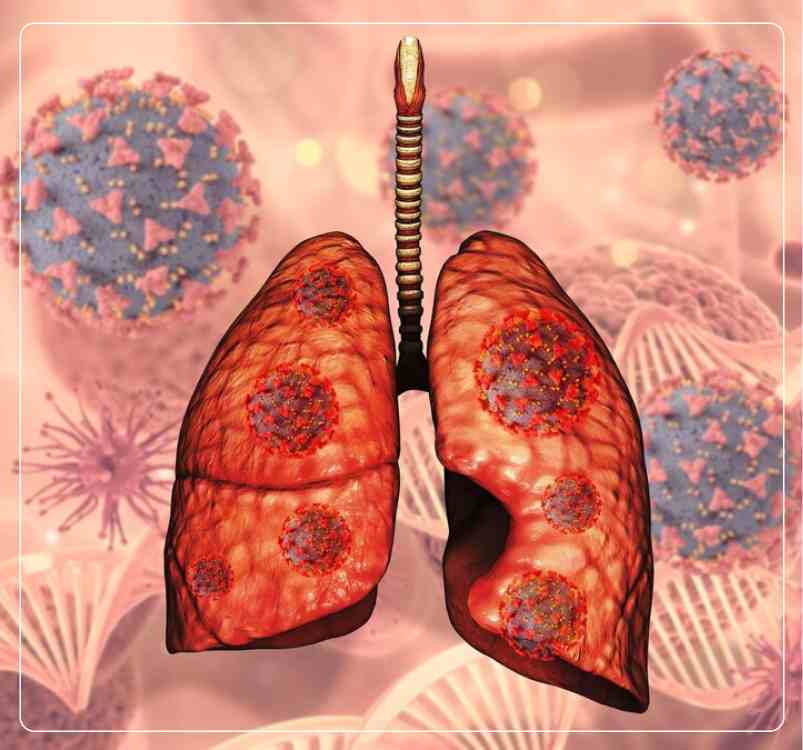
Lung cancer is a malignant neoplastic disease that surfaces in the lungs, typically developing in the tissues and airways. It occurs when abnormal cells in the lung tissue grow uncontrollably, forming a tumor. These malignant cells can infest nearby tissues and spread to other body parts through the bloodstream or lymphatic system, known as metastasis. Lung cancer can remain asymptomatic in its early stages, making regular screenings essential for individuals at risk.
Schedule a consultation with Dr. Mukti Mukherjee for accurate risk evaluation. She is best known for lung cancer treatment in Kolkata and specializes in radiation oncology therapy.
Types of Lung Cancer

Non-small cell lung cancer (NSCLC)
This classifies several subtypes, including:
- Adenocarcinoma: The most common type, often arising in the outer part of the lung.
- Squamous cell carcinoma: Typically develops in the central airways of the lung.
- Large cell carcinoma: A less common type with aggressive growth characteristics.
Small cell lung cancer (SCLC)
SCLC is less common but more aggressive. It spreads rapidly and is mainly linked to smoking. Early intervention is critical for managing this type. It often affects both lungs and commonly metastasizes to other organs early in the disease course.
What Patients Say
Hear from our patients about their experience, care, and recovery journey.
Dr.Mukti Mukherjee(Radiation Oncology) was very kind, attentive and friendly. She listened carefully, answered all my questions, gave me guidance like a friend and made me feel at ease throughout my visit. I've never felt more comfortable. Highly recommend her!!
Dr.Mukti Mukherjee(Radiation Oncology) was incredibly kind and attentive. She listened carefully, answered all my questions, and made me feel at ease throughout my visit. I've never felt more comfortable discussing my health concerns. Highly recommend! Thank You.
Dr.Mukti Mukherjee is a very good and helpful.I pray to God bless her life.Go ahead achive your goal
I am fully satisfied with process of treatment, caring behaviour & patience to hear patients with smiling face. Dr. Mukti Mukherjee is really a good Doctor.
Mukti mam onk onk valo akjon doctor.ami amar jibona arokom doctor onk kom dakhachi uni ato valo ja amar lakhar vasa nai..amar maa ar liver cancer amadar k akjon doctor unar kacha refere kora ami jokon una k first dakhi khota boli ami to obak j arokom o doctor hoi uni ato help korachan amadar k onka k hajar bar thanks bollaw kom hoba. uni amar maa k onk mentally support korachan. ami jokoni phn kori uni khota bolan. amar maa ar ja osubida hoi uni sob sonan abon better jata hoi uni jatai koran. Thanks mam
Reach out: Your path to quality care starts here

58, Canal Circular Rd, Kadapara, Phool Bagan, Kakurgachi,
Kolkata - 700054
Let’s Talk
Symptoms
Early-Stage Symptoms
- Chronic cough lasting >3 weeks
- Hemoptysis (coughing up blood)
- Chest wall pain or discomfort
- Blood with cough or rust-colored phlegm
- Unexplained respiratory distress
- Shortness of breath
- Changes in voice quality, such as a raspy or hoarse voice
- Fatigue and weakness
- Wheezing
- Pain in arm and shoulder
- Weight Loss or feeling full
Symptoms if Metastatic Disease
Brain: Neurological complications with intense headache
Bone: Bone pain
Liver: Jaundice
Early symptoms of lung cancer may be subtle, such as a slight cough or mild fatigue. Routine screenings help detect cancer before symptoms worsen.

Causes

Smoking
Direct smoking and exposure to secondhand smoke are primary causes, responsible for 85% of cases.

Alcohol
Heavy or regular consumption of alcohol can lead to lung cancer.

Exposure to occupational hazards
Certain chemicals, such as asbestos, arsenic, and chromium, can increase the risk of lung cancer.

Air pollution
Long-term exposure to air pollution can contribute to lung cancer development.

Family history
A family history of lung cancer can slightly increase the risk.

Age
Most cases occur in people aged 65 and older.
Evaluation
Imaging Techniques
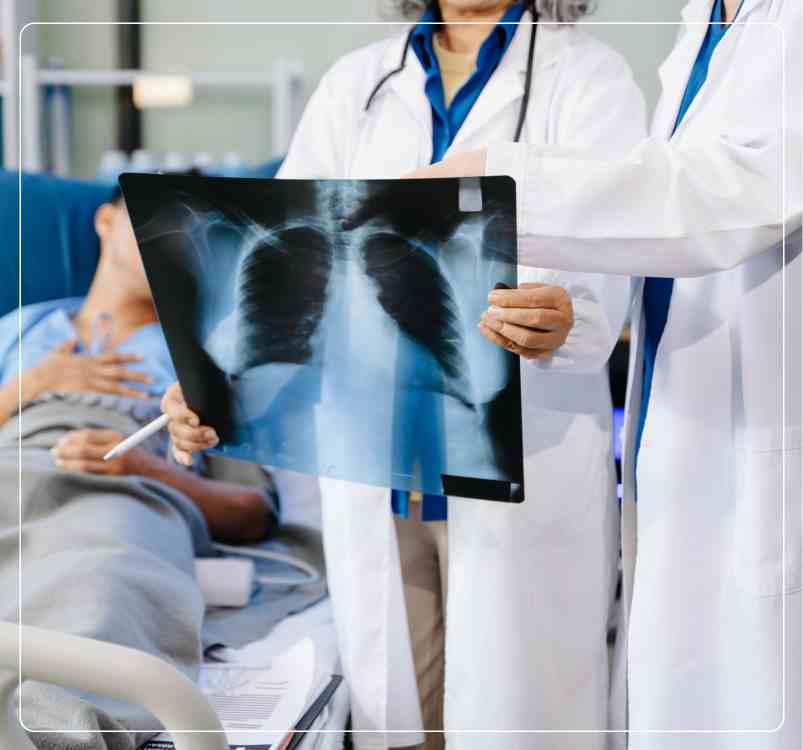
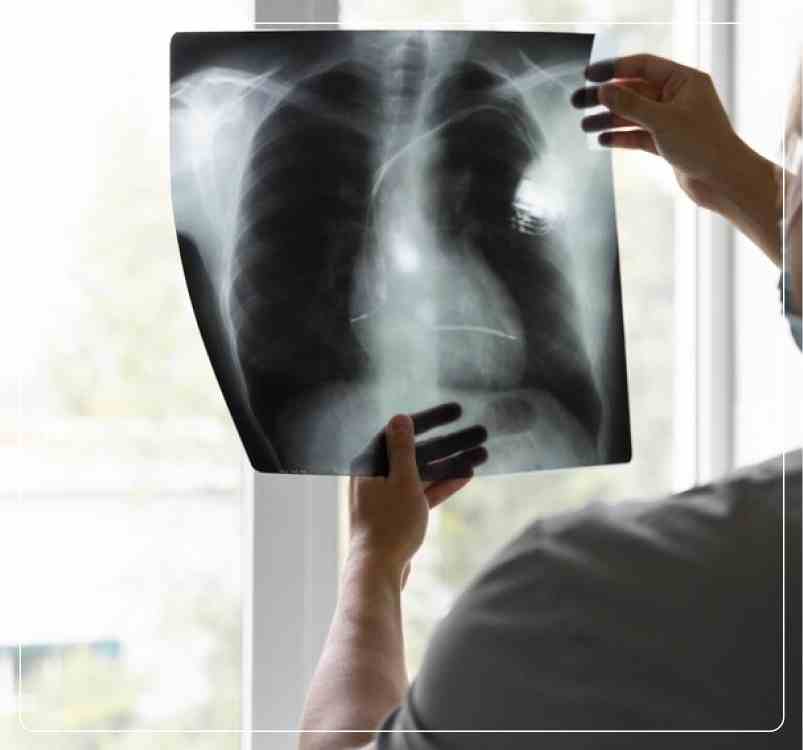
- Chest X-rays and CT scans of chest and abdomen
- Positron Emission Tomography (PET)
- Magnetic Resonance Imaging (MRI) of brain/spine
- Bone Scan
Invasive Diagnostic Procedures
- Bronchoscopy
- Transthoracic needle biopsy/bronchoscopic biopsy or brush cytology
- Molecular genetic profiling
- Thoracocentesis
- Mediastinoscopy
- EBUS/VATS
- Sputum cytology (examining mucus for cancer cells)
- Thoracoscopy/pleuroscopy
- Blood tests
Stages of Lung Cancer
Lung cancer is categorized into four stages based on its spread:
Stage I & II: Early stage
Stage III: Locally advanced
Stage IV: Metastatic
Stage IV A: Spread to one distant location (e.g., other lung, brain, liver), nearby structures (any T), nearby lymph nodes (any N), the heart (pericardium).
Stage IV B: Spread to multiple distant locations or extensive spread within the chest.
Stage IV C: Spread to the fluid around the lungs or heart, or multiple additional tumors within the lungs.
Management
Radiation therapy
Chemotherapy
Targeted therapy
Immunotherapy
Surgery (only in selected early stage cases)
For more details in lung cancer radiation therapy in Kolkata, contact Dr. Mukti Mukherjee.


Frequently Asked Questions
Can non-smokers develop lung cancer?
Yes, exposure to radon, air pollution, and genetic factors contribute to lung cancer in non-smokers.
Does radiation therapy cure lung cancer?
Radiation is effective in many cases, especially when combined with other treatments. Consult experts like Dr. Mukti Mukherjee for more treatment-related advice.
Does lung cancer always cause pain?
Not always. Pain may not appear until the later stages of the disease. However, some patients may experience chest pain or other discomfort even in the earlier stages.
What's the survival rate for lung cancer?
The survival rates vary depending on the type and stage of the cancer as well as how early your condition is getting detected.
What is the success rate of radiation for lung cancer?
Radiation therapy helps control lung cancer spread with a success rate of up to 95% for at least 3 years after getting the treatment.