
Throat cancer is no longer limited to smokers or older men. Younger and non-smoking patients are being diagnosed too, raising urgent questions.
Smoking, alcohol, and HPV are key risk factors for throat cancer, but infection, immunity, and chronic irritation also contribute to disease development. Ignoring early signs delays diagnosis.
Dr Mukti Mukherjee, an experienced throat cancer doctor at her Kolkata practice, can help decode risks, detect early changes, and guide timely, life-saving intervention.
Today's blog will discuss the real causes, warning signs, and prevention steps of throat cancer that every concerned family should know.
Without further ado, let’s begin.
When Smoking Isn’t the Only Culprit: The Rising Pattern of Throat Cancer
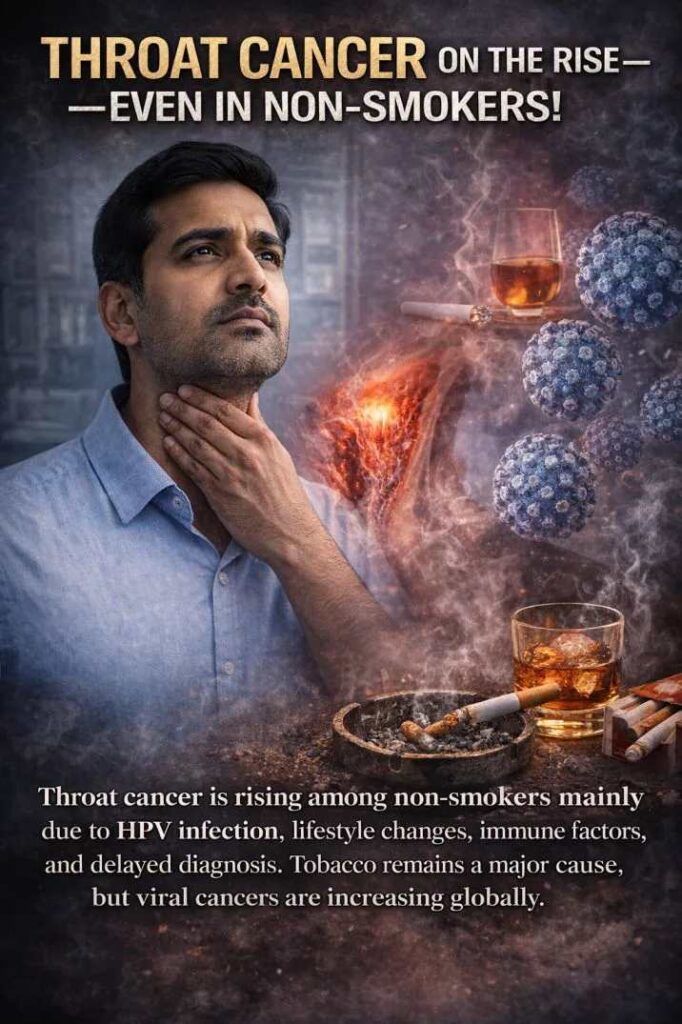
Throat cancer is increasingly seen in non-smokers due to factors like HPV infection, alcohol use, weakened immunity, and chronic irritation—making early symptom awareness and risk evaluation critical even without a smoking history.
Understanding the causes of throat cancer means looking beyond smoking alone.
Throat Cancer Explained: Where It Starts and How It Spreads
Throat cancer begins in the lining of the pharynx or larynx and can spread locally to nearby tissues and lymph nodes, and, in advanced stages, to distant organs—making early detection and staging critical for effective treatment and survival.
Areas commonly affected
- Voice box (larynx)
Cancer here affects speech early. Persistent hoarseness or a change in voice is often the first warning sign.
- Oropharynx (tonsils, back of tongue, soft palate)
Many modern cancers arise here. Several oropharyngeal cancer causes are linked to viral infections like HPV.
- Hypopharynx
This deeper throat region may not show symptoms early. Patients often notice swallowing difficulty later.
Why location affects symptoms and treatment
Location determines how early symptoms appear and what treatment is needed. Voice box cancers may present early, while deeper cancers remain silent longer.
Dr Mukti Mukherjee, an experienced radiation oncologist and throat cancer doctor, helps determine the exact site and the best therapeutic approach.
Smoking and tobacco: The biggest traditional cause of throat cancer
Tobacco contains carcinogenic chemicals that damage throat cells and cause DNA mutations over time. Long-term exposure significantly increases cancer risk.
How tobacco damages throat cells
- Chemical carcinogens explanation
Tobacco smoke contains thousands of chemicals. Many directly irritate the throat lining cells repeatedly.
- The DNA mutation concept: simplified
Repeated exposure damages DNA repair systems. Cells begin growing uncontrollably, eventually forming cancer.
This explains the strong association between smoking and throat cancer risks seen worldwide.
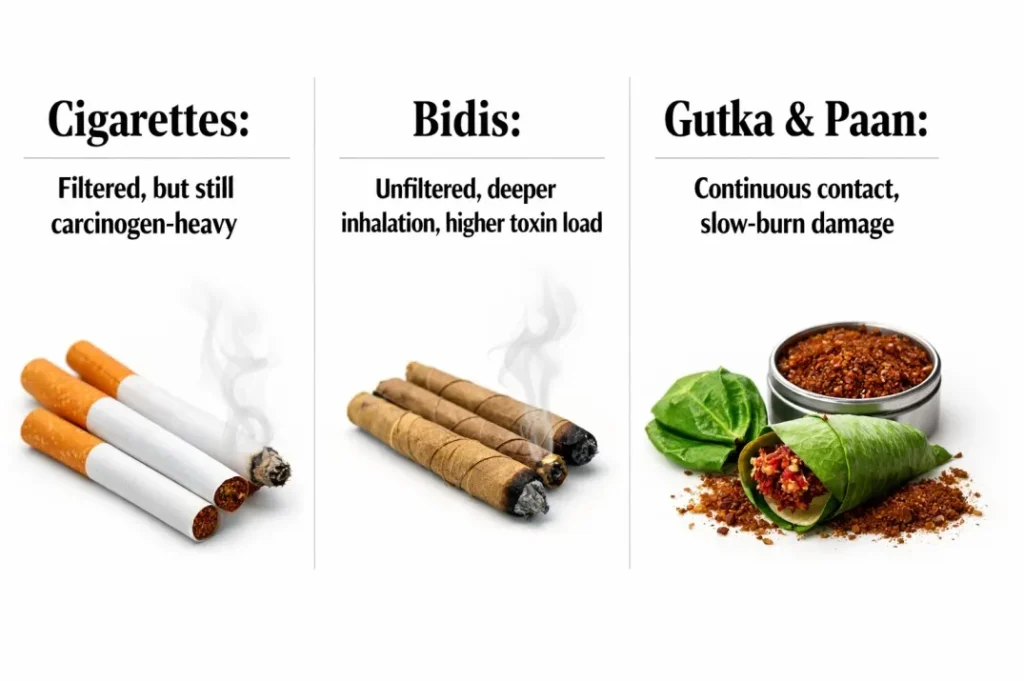
Cigarettes vs bidi vs chewing tobacco risk
Risk isn’t loyal to cigarettes alone. It travels across every form of tobacco, just wearing different disguises.
Cigarettes, bidis, and chewing tobacco all increase throat cancer risk—bidis deliver higher toxin exposure due to poor filtration, while gutka and paan keep carcinogens in constant contact with tissues, prolonging damage and raising cancer potential.
Special mention:
Tobacco chewing and throat cancer risk are often underestimated because people believe smokeless forms are safer.
Truth is - Smokeless tobacco means tobacco that isn’t burned or smoked. It’s used directly in the mouth or nose, so the chemicals sit on your tissues rather than passing through the smoke.
No smoke doesn’t mean safe. These products keep cancer-causing substances in constant contact with the mouth and throat, often for long periods, which quietly increases cancer risk.
Does quitting reduce throat cancer risk?
Yes. Risk reduces significantly after quitting.
Benefits include:
- Better tissue healing
- Reduced DNA damage progression
- Improved treatment outcomes if cancer develops later.
Stopping today always helps tomorrow.
Alcohol and throat cancer: Why the combination with smoking is dangerous
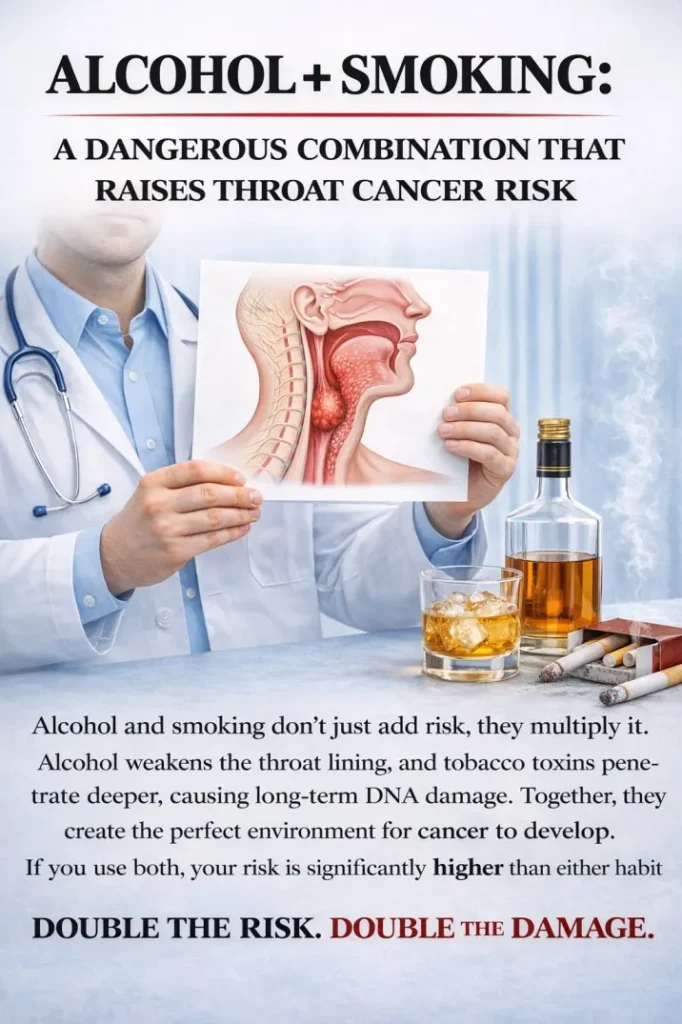
Combined use of alcohol and tobacco dramatically multiplies cancer risk compared to either habit alone.
How alcohol weakens throat tissue
Alcohol dries and inflames the throat lining. Damaged cells become more vulnerable to carcinogens. The alcohol and throat cancer link becomes stronger with long-term heavy intake.
Why alcohol increases tobacco absorption
Alcohol acts like a solvent. It allows harmful tobacco chemicals to penetrate deeper into tissues.
Risk multiplier effect explained simply
| Habit Combination | Cancer Risk Impact |
| Tobacco alone | High risk |
| Alcohol alone | Moderate risk |
| Tobacco + alcohol | Very high risk |
Doctors frequently see aggressive disease among combined habit users.
HPV infection: The rising modern cause of throat cancer
Human papillomavirus (HPV) infection can cause throat cancer by altering cells' DNA. HPV-related cancers are increasing globally, especially among younger adults.
What HPV is and how it spreads
HPV is a common virus spread through close skin contact and oral exposure.
Most infections clear naturally. However, persistent oral HPV infection and cancer risk develop in a small group of people. The conversation should remain educational and stigma-free.
Why HPV-related throat cancer is rising globally
Lifestyle changes and increased viral exposure are contributing factors.
Doctors now see patients with no smoking history presenting with HPV throat cancer symptoms, such as neck swelling or swallowing difficulty.
How HPV throat cancer is different from tobacco-related cancer
Understanding the differences between HPV and tobacco-related throat cancer is important.
| Feature | HPV Cancer | Tobacco Cancer |
| Age group | Younger patients | Older patients |
| Smoking history | Often absent | Usually present |
| Treatment response | Often better | Variable |
Role of HPV vaccination in prevention
HPV vaccination reduces infection risk significantly. Awareness among adolescents and young adults is essential.
Guidance from Dr Mukti Mukherjee, a renowned throat cancer doctor in Kolkata, helps patients understand eligibility criteria and preventive measures.
Other hidden risk factors that many people ignore
- Poor oral hygiene: Chronic infection and inflammation allow harmful bacteria to persist.
- Long-term acid reflux: Repeated exposure to acid slowly damages the throat lining.
- Weak immunity: Patients with uncontrolled diabetes or long-term illness may struggle to clear infections.
- Occupational chemical exposure: Industrial fumes, dust, and chemical vapours increase the risk of irritation.
Many of these contribute to broader laryngeal cancer risk factors seen in working populations.
Early warning signs of throat cancer that people often overlook
Many patients ignore the early signs of throat cancer, assuming they are due to infection.
- Persistent sore throat: Pain that does not improve with medication needs evaluation.
- Difficulty swallowing: A food-sticking sensation should never be ignored.
- Voice change or hoarseness: Especially important for cancers of the voice box.
- Lump in the neck: Often, the first sign of HPV-related cancers.
- Unexplained weight loss: May indicate advanced disease.
If symptoms persist, consult a throat cancer doctor in Kolkata without delay.
Throat Cancer Risk: Who Needs to Be Most Alert?
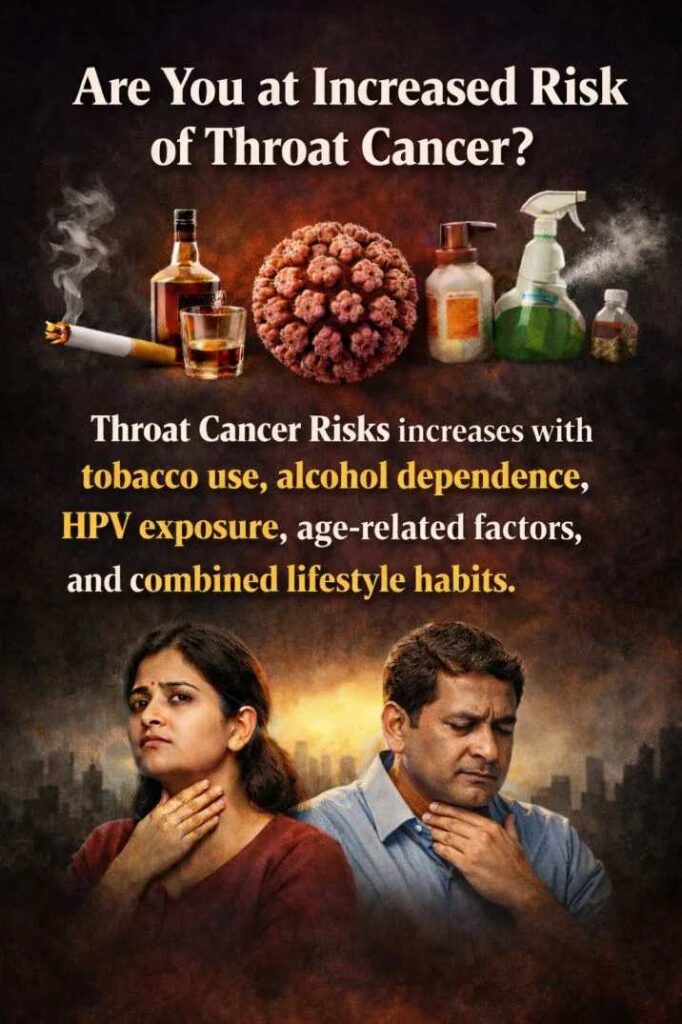
Risk increases with tobacco use, alcohol dependence, HPV exposure, age-related factors, and combined lifestyle habits.
Risk groups include:
Understanding who is at high risk for throat cancer helps with early screening.
- Heavy smokers
- Alcohol dependence
- Multiple sexual partners increase HPV exposure
- Younger HPV-related cases are rising globally
- Combined tobacco and alcohol users
Smoking vs Alcohol vs HPV – Risk Comparison
Different risk factors cause cancer through different mechanisms. Prevention depends on lifestyle modification and vaccination awareness.
Risk Comparison Table
| Risk Factor | How it Causes Cancer | Who Is Most Affected | Prevention Possibility |
| Smoking | DNA damage through toxins | Long-term smokers | Quit tobacco |
| Alcohol | Tissue irritation | Heavy drinkers | Moderate intake |
| HPV | Viral DNA changes | Younger adults | Vaccination + awareness |
Throat Cancer Prevention: Is it Possible
Many throat cancers are preventable through lifestyle changes, vaccination, and early screening.
- Tobacco cessation: Stopping tobacco dramatically lowers risk.
- Alcohol moderation: Limit intake and avoid combining with other substances.
- HPV vaccination awareness: Vaccination protects against high-risk viral strains.
- Regular ENT or cancer screening: Screening helps detect early disease before symptoms worsen.
Preventive counselling from a throat cancer doctor in Kolkata helps personalise risk reduction strategies.
When should you see a doctor for throat symptoms?
Persistent symptoms lasting more than two to three weeks require evaluation to rule out cancer.
Seek medical advice if you have:
- Symptoms lasting more than 2–3 weeks
- Progressive swallowing difficulty
- Persistent voice change
- Neck swelling
Early consultation with a throat cancer doctor in Kolkata can lead to faster diagnosis and better outcomes.
People Also Ask
Can non-smokers get throat cancer?
Yes. HPV infection and other factors can cause throat cancer even in people who never smoked.
Is HPV throat cancer curable if detected early?
Early-stage HPV-related cancers often respond very well to treatment.
How long does smoking take to cause throat cancer?
Risk increases after years of exposure, but duration varies between individuals.
Does occasional drinking increase risk?
Occasional intake carries a lower risk, but combined tobacco use significantly increases danger.
Is throat cancer contagious?
Cancer itself is not contagious. HPV infection can spread through close contact.
Can throat cancer occur at a young age?
Yes. HPV-related cancers are increasingly seen in younger adults worldwide.
Final summary – Understanding risk is the first step toward prevention
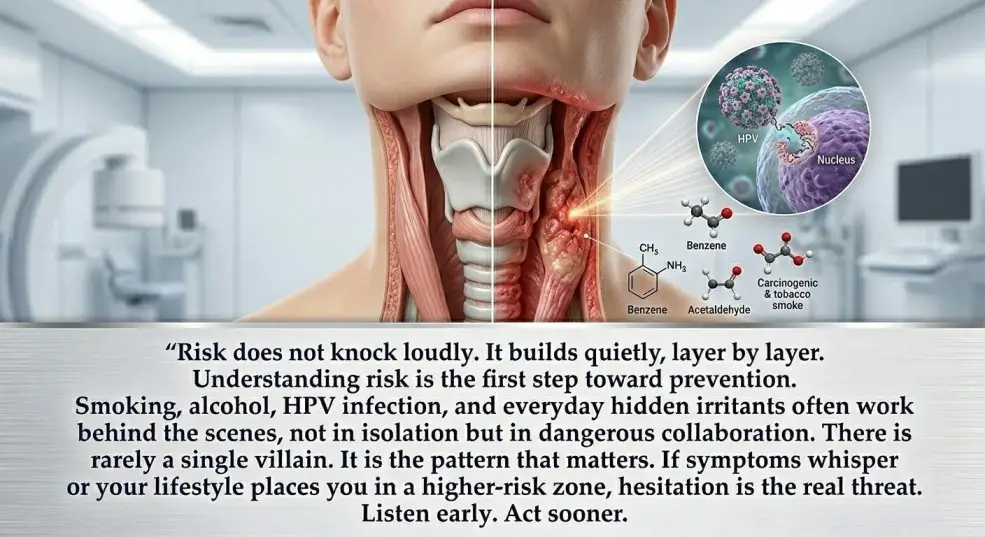
Consult Dr Mukti Mukherjee, an experienced throat cancer doctor in Kolkata, for expert evaluation and personalised radiation treatment planning.
Bring your reports. Ask questions. Early action saves lives.
Book your private session.