
Gynecologic Cancer
Dr. Mukti Mukherjee
[12+ Years Experience]
Radiation Oncologist In Kolkata
Home / Treatments / Gynecologic Cancer
Gynecologic Cancer Doctor in Kolkata
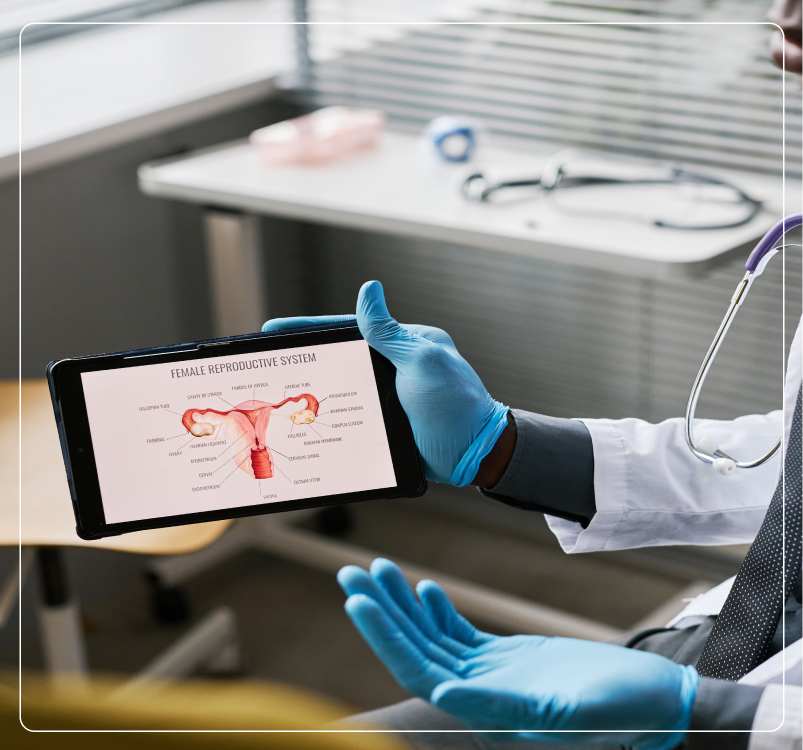
Gynecologic cancer develops in a woman's reproductive system that targets critical organs like the cervix, uterus, ovaries, vagina, and vulva. These cancers affect women of all ages but are most common in those over 50. This cancer can significantly impact a woman's health and require specialized medical attention. Getting an appointment from Dr. Mukti Mukherjee to process early detection and gynecologic cancer treatment in Kolkata can increase the patient’s revival and survival rates.
Types of Gynecologic Cancer

Cervical Cancer
Cancer that develops in the cervix's tissues, the lower part of the uterus and is often linked to human papillomavirus (HPV) infections.
Uterine Cancer
Cancer that develops in the lining or muscular wall of the uterus with endometrial cancer being the most common type affecting reproductive-aged and menopausal women.
Ovarian Cancer
It’s a malignancy that develops in the epithelial, germ cell, or stromal tissues of the ovary, fallopian tube and peritoneum.
Vaginal Cancer
Cancer that develops in the vagina, the canal that connects the uterus to the outside of the body.
Vulvar Cancer
Cancer that develops in the vulva, the external part of the female genitals. It can cause itching or a visible lump in the vulva.
What Patients Say
Hear from our patients about their experience, care, and recovery journey.
Dr.Mukti Mukherjee(Radiation Oncology) was very kind, attentive and friendly. She listened carefully, answered all my questions, gave me guidance like a friend and made me feel at ease throughout my visit. I've never felt more comfortable. Highly recommend her!!
Dr.Mukti Mukherjee(Radiation Oncology) was incredibly kind and attentive. She listened carefully, answered all my questions, and made me feel at ease throughout my visit. I've never felt more comfortable discussing my health concerns. Highly recommend! Thank You.
Dr.Mukti Mukherjee is a very good and helpful.I pray to God bless her life.Go ahead achive your goal
I am fully satisfied with process of treatment, caring behaviour & patience to hear patients with smiling face. Dr. Mukti Mukherjee is really a good Doctor.
Mukti mam onk onk valo akjon doctor.ami amar jibona arokom doctor onk kom dakhachi uni ato valo ja amar lakhar vasa nai..amar maa ar liver cancer amadar k akjon doctor unar kacha refere kora ami jokon una k first dakhi khota boli ami to obak j arokom o doctor hoi uni ato help korachan amadar k onka k hajar bar thanks bollaw kom hoba. uni amar maa k onk mentally support korachan. ami jokoni phn kori uni khota bolan. amar maa ar ja osubida hoi uni sob sonan abon better jata hoi uni jatai koran. Thanks mam
Reach out: Your path to quality care starts here

58, Canal Circular Rd, Kadapara, Phool Bagan, Kakurgachi,
Kolkata - 700054
Let’s Talk
Symptoms
Abnormal vaginal bleeding or discharge
Pelvic pain or pressure
Abdominal swelling
Frequent or urgent urination
Constipation
Constant abdominal discomfort or pain, bloating
Constant pelvic pain or pressure

Causes

Human papillomavirus (HPV) infection

Older age

A family history of gynecologic cancer, especially ovarian, Fallopian tube

Mutations in the BRCA1 and BRCA2 genes

Exposure to this synthetic form of estrogen in the womb (Diethylstilbestrol exposure)

Smoking

Obesity

Excessive hormone exposure (from estrogen replacement therapy)

Sexually transmitted infections (STIs)

Chronic health conditions like diabetes, hypertension, HIV infection, or AIDS can increase the risk.

Polycystic ovarian syndrome (PCOS)
Evaluation
Dr. Mukherjee emphasizes personalized treatment plans that consider cancer stage, patient's overall health,
and individual healing capabilities. The treatment involves:
Gynecological examination
Pap smear test
Biopsy
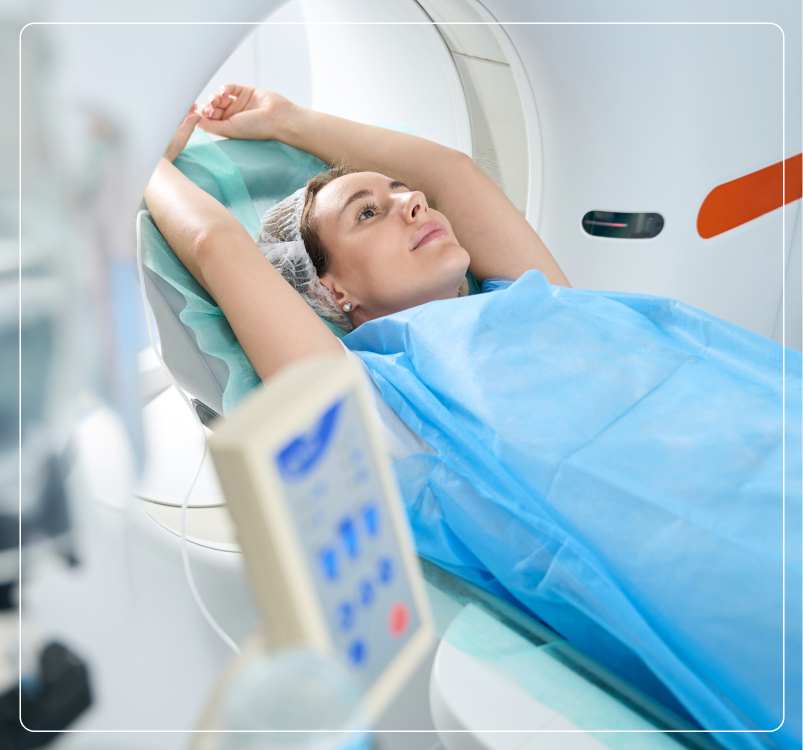
MRIs, CT scans, or PET scans
Blood tests (CA-125)

Management
Surgery
Radiation therapy
Chemotherapy
Targeted therapy
Immunotherapy
Experienced radiation oncologists like Dr. Mukti Mukherjee uses this advanced gynecologic cancer radiation therapy in Kolkata to cure gynecologic cancer, control tumor growth, or relieve symptoms such as pain or bleeding. This therapy uses radiation to treat cancer by damaging cells. When these cells die, the body naturally removes them.


Frequently Asked Questions
Will I be infertile after gynecologic cancer treatment?
The impact on fertility varies greatly depending on the type of cancer, the stage at diagnosis, and the specific treatments received (surgery, chemotherapy, radiation). Consult your doctor and discuss your concerns before the treatment starts.
Can Gynecologic Cancer Be Prevented?
You can control gynecologic cancer through regular screenings and HPV vaccinations. Also, maintaining a healthy lifestyle can reduce risk factors.
Is gynecologic cancer hereditary?
While some types of gynecologic cancer have a stronger hereditary component than others (such as ovarian and breast cancer), the majority of cases are not inherited. However, family history can be an important risk factor and should be discussed with a healthcare provider.
Will I need surgery along with radiation?
It depends on the cancer stage. While radiation therapy is effective, with 71.8% survival rates, some patients require both radiology and cancer treatments for optimal outcomes.
Will I be radioactive after radiation therapy?
With external beam radiation, you are not radioactive after treatment. With brachytherapy, you may be slightly radioactive for a short period, but precautions will be taken to minimize any risk to others.