
Breast Cancer
Dr. Mukti Mukherjee
[12+ Years Experience]
Radiation Oncologist In Kolkata
Home / Treatments / Breast Cancer
Breast Cancer Doctor in Kolkata
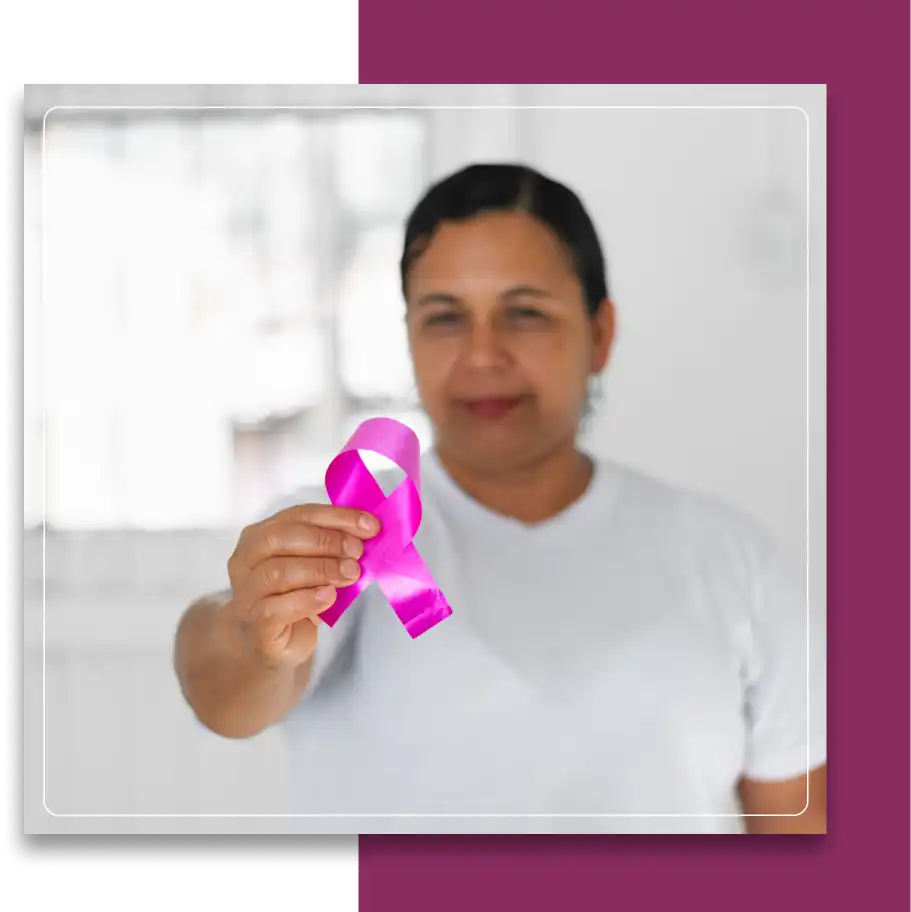
Breast cancer is a condition that affects millions of women worldwide. It occurs when breast cells mutate and multiply uncontrollably and develop tumors that can spread to other body parts. While it's less frequent, breast cancer can also grow in men. To cure breast cancer and get a quick recovery outcome, get early detection and advanced breast cancer treatment done.
Book a consultation with Dr. Mukti Mukherjee to discuss your breast cancer concerns.
Types of Breast Cancer

Ductal Carcinoma
It’s the most common invasive breast cancer that originates in the milk ducts and spreads to the surrounding tissues. When it’s non-invasive, it’s called Ductal Carcinoma in Situ (DCIS).
Lobular Carcinoma
Lobular carcinoma grows in the milk-producing glands (lobules). It’s cancerous and can spread to the lymph nodes or other tissues. When it’s non-invasive, it’s called Lobular Carcinoma in Situ (LCIS).
Hormone and Protein Receptors
- Estrogen Receptor (ER)-positive: Cancer cells stimulated by estrogen.
- Progesterone Receptor (PR)-positive: Cancer cells stimulated by progesterone.
- HER2-positive breast cancer: Cancer cells with excessive HER2 protein, promoting aggressive growth.
- Triple-negative breast cancer: Cancer cells lacking ER, PR, and HER2 receptors.
Other Types of Invasive Breast Cancer
- Mucinous
- Medullary
- Tubular carcinomas
- Malignant phyllodes tumors
What Patients Say
Hear from our patients about their experience, care, and recovery journey.
Dr.Mukti Mukherjee(Radiation Oncology) was very kind, attentive and friendly. She listened carefully, answered all my questions, gave me guidance like a friend and made me feel at ease throughout my visit. I've never felt more comfortable. Highly recommend her!!
Dr.Mukti Mukherjee(Radiation Oncology) was incredibly kind and attentive. She listened carefully, answered all my questions, and made me feel at ease throughout my visit. I've never felt more comfortable discussing my health concerns. Highly recommend! Thank You.
Dr.Mukti Mukherjee is a very good and helpful.I pray to God bless her life.Go ahead achive your goal
I am fully satisfied with process of treatment, caring behaviour & patience to hear patients with smiling face. Dr. Mukti Mukherjee is really a good Doctor.
Mukti mam onk onk valo akjon doctor.ami amar jibona arokom doctor onk kom dakhachi uni ato valo ja amar lakhar vasa nai..amar maa ar liver cancer amadar k akjon doctor unar kacha refere kora ami jokon una k first dakhi khota boli ami to obak j arokom o doctor hoi uni ato help korachan amadar k onka k hajar bar thanks bollaw kom hoba. uni amar maa k onk mentally support korachan. ami jokoni phn kori uni khota bolan. amar maa ar ja osubida hoi uni sob sonan abon better jata hoi uni jatai koran. Thanks mam
Reach out: Your path to quality care starts here

58, Canal Circular Rd, Kadapara, Phool Bagan, Kakurgachi,
Kolkata - 700054
Let’s Talk
Symptoms of Breast Cancer
Breast cancer symptoms can differ for each individual, and there isn’t a precise way to describe what a lump or mass feels like. Be familiar with the look, feel, and structure of your breasts to notice any changes. If you detect anything unusual, consult your doctor. Some common symptoms include:
A new lump or thickened tissue in the breast.
Change in breast shape or size.
Breast swelling.
Breast or nipple ulceration, often involves the areola.
Skin dimpling, redness, or scaly patches.
Nipple discharge (other than milk).
Nipple inversion (turning inward).
Breast dimpling or puckering.

Causes of Breast Cancer

Age

Family history

Genetics (BRCA1 and BRCA2 genes)

Hormone exposure (due to long Postmenopausal hormone therapy, oral contraceptive pills)

Lifestyle factors (unhealthy diet/junk food consumption, absence of exercise, heavy alcohol consumption, sedentary lifestyle)

Obesity

Dense breast tissues

Early menstruation
Screening
Dr. Mukti Mukherjee follows comprehensive diagnosis steps to detect breast cancer stage, size, an location, listed below:
Self breast examination
Mammography
Clinical breast examination
Evaluation
- Ultrasound
- Mammography
- Biopsy HPR & IHC
- CT/ PET CT/Magnetic Resonance Imaging (MRI)/Bone Scan

Stages of Breast Cancer
Early Stage (I-II)
Locally Advanced (III)
Metastatic (IV)
Consult with Dr. Mukti Mukherjee to get the stages diagnosed early and receive immediate medical support.
Management
Once your cancer stage is diagnosed, your doctor will guide you and suggest the best treatment option to cure your condition. There are many types of breast cancer treatment including:
- Surgery
- Radiation therapy
- Chemotherapy
- Hormone therapy
- Targeted therapy
- Immunotherapy
To learn more about effective breast cancer treatments, visit Dr. Mukti Mukherjee's clinic.

Frequently Asked Questions
Are all breast lumps cancerous?
Most breast lumps are benign, but professional evaluation is essential.
Is breast cancer curable?
Yes. With timely detection and radiation oncology therapy, many cases, even stage 1 breast cancer, are curable.
What are the symptoms of stage 3 breast cancer?
The symptoms can vary but may include larger tumors, lymph node involvement, and potential spread to other organs. Consult Dr. Mukti Mukherjee for early diagnosis, and radiation therapy started.
Can lifestyle impact breast cancer risk?
Yes. Lifestyle has a major role in increasing the risk of breast cancer. To prevent, maintain a healthy diet, exercise, and avoid tobacco consumption.
Can I still breastfeed after breast cancer radiation treatment?
It may be possible in some cases, depending on the type and extent of treatment. You must consult your doctor first.