
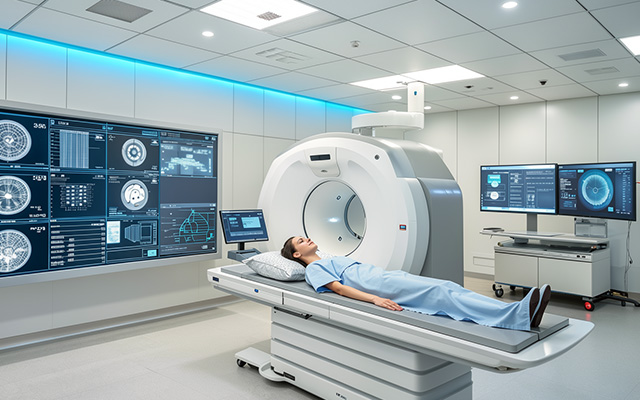
Modern radiation today focuses on accuracy rather than intensity. Newer approaches like IGRT, IMRT, and SBRT help doctors deliver treatment to the intended area with greater control, while limiting impact on surrounding healthy tissue.
This is why many patients and families ask a straightforward question: Is modern radiation more accurate?
Understanding how these techniques work explains how radiation therapy has become more precise, consistent, and patient-friendly over time. This guide explains it clearly, without unnecessary complexity.
How accurate is modern radiation really?
Accuracy matters because even a few millimetres can separate a tumour from the spinal cord, lungs, bowel, or brain tissue. Modern techniques such as IGRT, IMRT, and SBRT were developed to solve this exact problem.
Understanding how they differ helps patients make informed decisions—especially when guided by a radiation oncologist in Kolkata.
What does “accuracy” actually mean in radiation oncology?
In medical terms, accuracy in radiation therapy means how precisely radiation is delivered to the tumour while sparing healthy tissue.
This involves three components working together:
- Imaging accuracy – seeing the tumour clearly before and during treatment
- Planning accuracy – shaping and calculating the dose correctly
- Delivery accuracy – ensuring radiation reaches only the intended target
Modern radiation techniques integrate all three. Older systems relied heavily on fixed assumptions. Newer systems adjust in real time.
Why were older radiation techniques more limited?
Traditional radiation therapy was based on static imaging taken days or weeks before treatment began. Tumours, however, can move due to breathing, digestion, or changes in body position. This forced doctors to use larger safety margins, exposing more normal tissue to radiation.
Key limitations of older techniques:
- Limited imaging during treatment
- Broader radiation fields
- Higher risk of side effects
- Less flexibility for complex tumour shapes
Modern techniques were designed specifically to overcome these issues.
How does IGRT improve precision during every radiation session?
IGRT helps doctors adjust treatment accurately each day by checking positioning just before therapy begins. Because the body can shift slightly between sessions, these daily checks ensure radiation is delivered exactly where planned, helping protect nearby healthy tissue while maintaining consistent accuracy throughout the course of treatment.
Let’s get down to understanding what IGRT is and how it improves precision during each radiation session.
What exactly is IGRT?
Image-Guided Radiation Therapy (IGRT) uses imaging before and sometimes during each treatment session to confirm the tumour’s exact position. These images are compared with the original treatment plan in real time.
Why does this matter clinically?
Tumours are not fixed objects. Daily imaging allows doctors to adjust for:
- Small changes in patient positioning
- Organ movement (especially in lung, prostate, and abdominal cancers)
- Tumour shrinkage during treatment
IGRT reduces guesswork and allows tighter safety margins—one of the biggest advances in radiation accuracy.
How does IMRT shape radiation instead of flooding tissue?
Instead of treating radiation like a blunt force, IMRT works more like a sculptor—precise, measured, and deliberately controlled. That precision is where the real difference begins.
What makes IMRT different?
Intensity-Modulated Radiation Therapy (IMRT) delivers radiation in multiple tiny beams, each with adjustable intensity. Instead of a uniform dose, the radiation is sculpted around the tumour.
What does this achieve?
IMRT allows:
- Higher dose to the tumour
- Lower dose to nearby organs
- Better control for irregularly shaped cancers
This is especially important in head-and-neck, gynecologic, and spinal tumours, where critical structures lie very close to cancer tissue.
Why is SBRT considered the most precise form of radiation?
Precision in SBRT isn’t accidental—it’s engineered. Every millimetre, every dose, every movement is planned before treatment ever begins.
What defines SBRT?
Stereotactic Body Radiation Therapy (SBRT) delivers very high doses in a few sessions with sub-millimetre accuracy. It combines advanced imaging, rigid immobilisation, and sophisticated planning algorithms.
When is SBRT used?
SBRT is commonly used for:
- Early-stage lung cancer
- Small liver tumours
- Spine metastases
- Selected prostate and adrenal tumours
Because doses are high, precision must be exact. Even minimal deviation can increase risk—this is why SBRT is reserved for carefully selected cases.
How do IGRT, IMRT, and SBRT compare in real terms?
Technical comparison of modern radiation techniques
| Feature | IGRT | IMRT | SBRT |
| Imaging during treatment | Yes | Limited | Extensive |
| Dose shaping | Moderate | High | Very high |
| Sessions required | Many | Many | Few |
| Accuracy level | High | Very high | Ultra-high |
| Suitable for small targets | Yes | Yes | Best suited |
Does higher accuracy actually reduce side effects?
The short answer is yes. And this is not theoretical—it is backed by clinical evidence. By limiting radiation exposure to healthy tissue, modern techniques significantly reduce side effects.
To name some
- Skin reactions
- Swallowing difficulty
- Bowel and bladder irritation
- Long-term organ damage
Impact of precision on side effects
| Radiation Approach | Normal Tissue Exposure | Side Effect Risk |
| Older techniques | High | Moderate to high |
| IMRT with IGRT | Reduced | Lower |
| SBRT | Minimal | Lowest (when appropriate) |
This is why treatment planning today focuses as much on protection as on tumour control.
How do doctors decide which technique is right for a patient?
There is no “best” technique for everyone. Selection depends on tumour size, location, motion, and surrounding organs.
Decision factors in choosing a radiation technique
| Factor | Why it matters |
| Tumour location | Proximity to vital organs |
| Tumour motion | Breathing or bowel movement |
| Size and shape | Ability to sculpt dose |
| Overall health | Tolerance of high-dose treatment |
An experienced radiation oncologist in Kolkata evaluates all these factors before recommending IGRT, IMRT, SBRT, or a combination.
Is modern radiation always safer than older methods?
In most appropriately selected cases, yes. Simply because it is measured, guided, and controlled at every step.
However, higher accuracy also demands greater expertise, planning time, and quality assurance. Precision technology only works when used correctly. This is why training, experience, and institutional protocols matter as much as machines.
Why does expertise matter as much as technology?
Advanced radiation systems are tools.
Their effectiveness depends on:
- Proper imaging interpretation
- Accurate contouring of tumours and organs
- Correct dose calculations
- Continuous quality checks
Without these, even the best technology cannot deliver safe outcomes. This is where guidance from a skilled radiation oncologist in kolkata becomes critical.
What should patients realistically expect from modern radiation accuracy?
Modern radiation does not guarantee zero side effects or instant results. What it does offer is better control, lower risk, and predictable outcomes when used correctly.
Precision reduces uncertainty—for both patients and doctors.
How does Dr Mukti Mukherjee approach precision radiation planning?
She focuses on selecting radiation techniques such as IGRT, IMRT, and SBRT based on tumour biology, anatomy, and patient safety rather than on default protocols.
Her approach integrates advanced imaging, evidence-based planning, and careful follow-up to ensure accuracy translates into real-world benefit.
Consult her as a radiation oncologist in Kolkata for clarity when faced with multiple radiation options.
📞Book a session today.
People Also Ask
Which radiation technology is best?
There is no single “best” radiation technology for everyone. The most suitable option depends on the location, size, and movement of the area being treated. Doctors choose from techniques like IGRT, IMRT, or SBRT based on which offers the highest precision while protecting nearby healthy tissue.
What is the most advanced radiation therapy machine?
The most advanced radiation therapy machines are modern linear accelerators equipped with image-guidance and motion-tracking capabilities. These systems allow doctors to adjust treatment in real time, improving accuracy and consistency during each session.
Which type of radiation do oncologists most often use?
Most oncologists commonly use external beam radiation therapy delivered through modern linear accelerators. Techniques such as IMRT and IGRT are widely used because they balance precision, safety, and effectiveness across many conditions.
What are the 4 R’s of radiation therapy?
The 4 R’s of radiation therapy are Repair, Reoxygenation, Redistribution, and Repopulation. These principles explain how radiation affects cells over time and why treatment is usually given in planned sessions rather than all at once.