
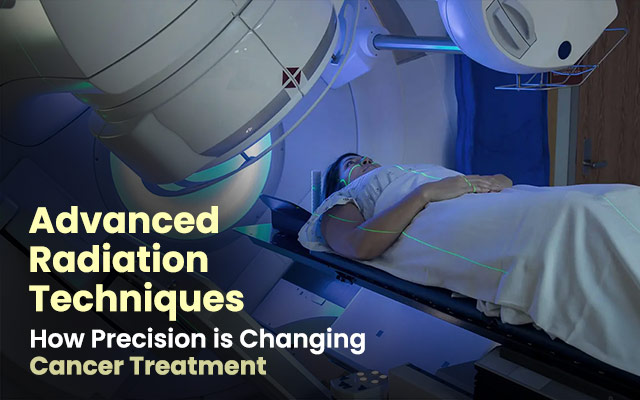
Cancer treatment today is far more effective than it was in the past. Instead of affecting the whole body, doctors can focus directly on the tumour and still protect the person. That’s the strength of modern radiation.
A skilled radiation oncologist can now use advanced machines that “see” the tumour, track it even if it moves, and deliver radiation only where it’s needed. This means more control for patients, fewer side effects, and a treatment journey that feels safer, smoother, and far more hopeful.
Today, we walk you through these newer methods in very simple words. No heavy terms. No scary tone. Just clear information.
Why Precision Matters in Radiation Therapy
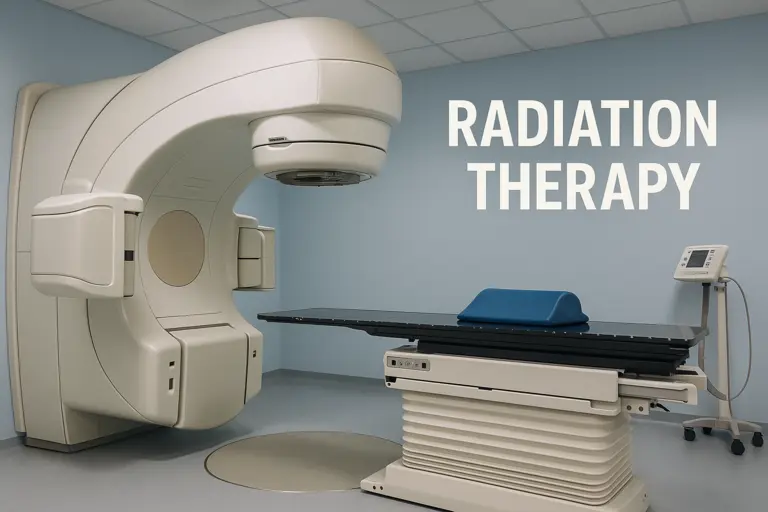
Radiation therapy utilises high-energy rays to target and destroy cancer cells. Earlier, the rays covered a broader area. That sometimes affected healthy parts too.
Now, with Advanced radiation techniques in oncology, doctors can focus the rays only on the tumour. This helps two things happen at the same time — strong treatment and good protection.
Targeting Tumours with Millimetre Accuracy
Modern radiation plans your treatment using scans. These scans show the tumour’s exact size, shape, and place. The machine then sends radiation straight to that point. Even if the tumour sits near the lung, bowel, or eye, the doctor can still treat it carefully.
Lower Risk for Healthy Organs and Tissues
The more focused the treatment, the less your normal organs suffer. This helps you eat better, move better, and recover better. This is the main idea behind Precision radiation therapy: treat the disease, not the whole body.
Old vs New Radiation
| Point | Earlier Radiation | Modern Precision Radiation |
| Area covered | Bigger, less focused | Small, exact area |
| Safety | Lower | Higher |
| Side effects | More | Often fewer |
| Comfort | Long courses | Sometimes shorter |
| Result | Good | Better, more controlled |
Image-Guided Radiation Therapy (IGRT)
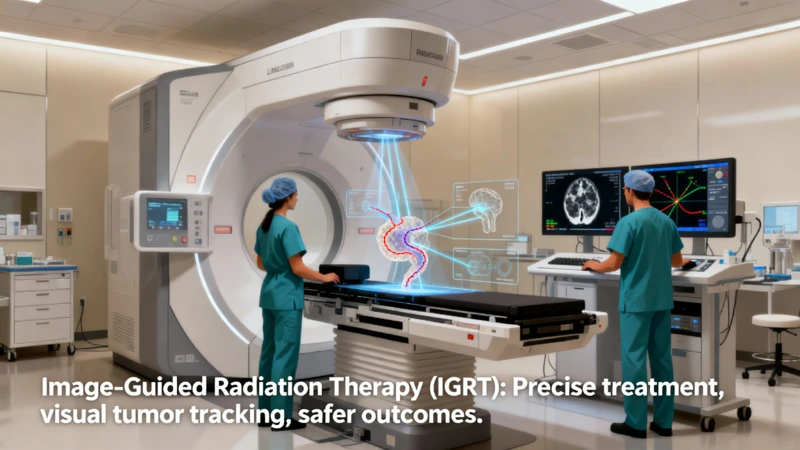
Let’s start with the term Image-guided radiation therapy (IGRT). While it may sound complex, the study indicates that it is actually very straightforward and intelligent. Think of it as “radiation with eyes.”
Before each sitting, the machine takes an image of the area. It checks, “Is the tumour in the same place as yesterday?”
If it has moved a little (because you breathed or your stomach shifted), the machine adjusts. So the radiation still hits the right spot.
Real-Time Imaging During Treatment
This “look first, treat next” method makes the treatment more accurate. It is very useful for tumours in the chest, abdomen, or prostate, where even small movements can happen.
Improving Safety and Accuracy
When the aim is consistently accurate, the doctor can administer the necessary dose with greater confidence. You get strong treatment with better safety.
Intensity-Modulated Radiation Therapy (IMRT)
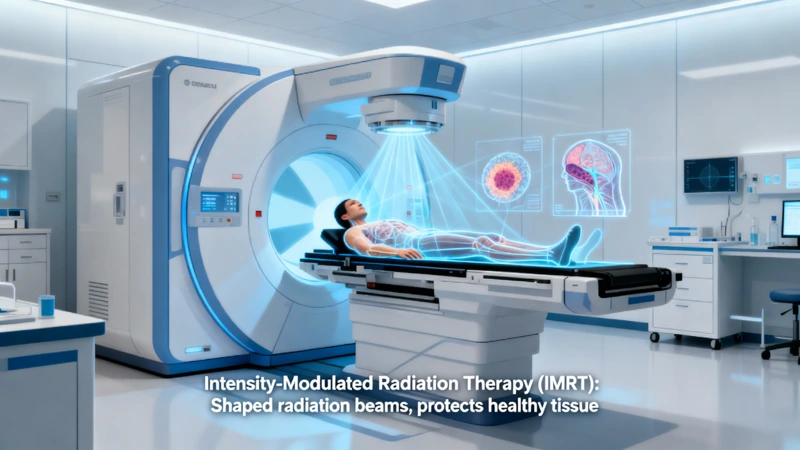
Next is Intensity-modulated radiation therapy (IMRT). Again, a big name with a simple idea. Not all tumours are round. Some sit in corners or near important nerves.
IMRT helps the doctor “shape” the radiation beam. It bends around the healthy organ and still covers the tumour.
Delivering Radiation in Complex Shapes
IMRT uses many small beams. Each beam carries a different strength. Together, they cover the entire tumour like a snug cap.
Reducing Side Effects for Patients
Because the beam avoids sensitive parts, patients often report fewer problems with swallowing, bowel habits, or mouth dryness. This is how modern radiation focuses on reducing the side effects of radiation therapy without compromising the treatment’s effectiveness.
Stereotactic Body Radiotherapy (SBRT)
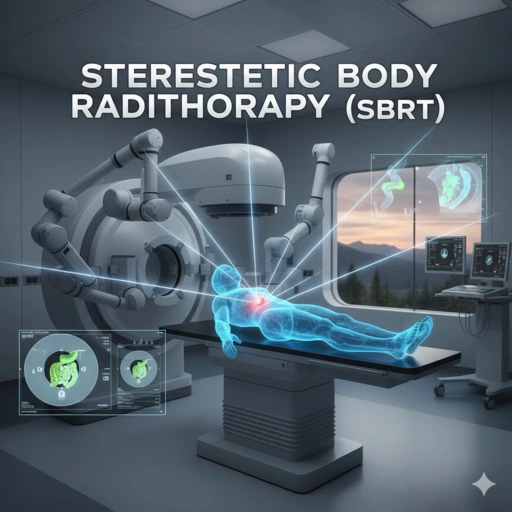
Now let’s talk about Stereotactic Body Radiotherapy (SBRT). You can remember it as “high precision, fewer visits.”
SBRT gives a high dose in very few sessions. Instead of 25–30 sittings, some patients finish in 3–5.
High-Dose Precision in Fewer Sessions
Why can doctors do that? Because the aim is very, very accurate. The machine knows exactly where to send the dose. So you don’t need to come for weeks.
Effectiveness in Lung and Liver Tumours
SBRT is often used for small lung or liver tumours, or for patients who are not candidates for surgery. It provides them with a concise, focused, and effective treatment.
Proton Beam Therapy — A Leap Forward
Proton beam therapy for cancer represents a significant advancement. In regular radiation, the rays pass through the body and exit on the other side.
With proton therapy, the beam enters the tumour and stops there. It doesn’t travel beyond it. This means the healthy tissues behind the tumour get far less radiation.
Why Proton Therapy Is Different
This “stop inside” feature makes proton therapy particularly useful for tumours near the brain, eyes, or spine, and for children. These are areas we must protect.
Benefits for Paediatric and Sensitive Cancers
Children have growing organs. Proton therapy protects those organs better. That is why many doctors call it one of the Safer cancer treatment options for selected cases.
Which Technique May Help You?
| Your situation | Doctor’ Technique |
| The tumour moves when you breathe | IGRT or SBRT |
| Tumour close to a vital organ | IMRT or Proton |
| You want/need a few visits | SBRT |
| Child or very delicate case | Proton |
| The tumour has an odd shape | IMRT |
Of course, this is only a guide. Your doctor will decide the best option after checking your reports.
How These Advances Improve Daily Life
Modern radiation is not only about killing cancer cells. It also cares about how you live during and after treatment.
Shorter Treatment Times
SBRT and better planning help many patients complete treatment more quickly. That means fewer hospital visits, less travel, and lower stress for families.
Better Long-Term Outcomes
When healthy organs are spared, you feel better even months later. Eating, speaking, and working all become easier when your body has faced less strain. This is how Radiation oncology innovations actually show up in real life — small problems during treatment and greater strength after treatment.
The Future of Precision Radiation Oncology
This field is still growing. The Future of precision oncology looks even brighter. Computers and AI are helping doctors plan better.
Machines can now read scans, outline the tumour, and suggest the safest angles. The doctor then reviews and personalises it.
AI and Machine Learning in Treatment Planning
AI makes planning quicker. That saves time for both doctor and patient. It also keeps the plan consistent.
Expanding Global Access to Advanced Therapies
India is catching up fast with these technologies. Patients here can receive world-class treatment without always having to travel abroad.
Meeting a radiation oncologist in Kolkata who uses these tools can make your treatment journey smoother and more confident.
Smarter, Safer, and More Effective Cancer Treatment
When you put all these methods together — IGRT, IMRT, SBRT, proton therapy — you get one clear message: cancer can be treated in a way that is powerful yet gentle. And that is exactly what a good radiation oncologist in Kolkata tries to do: choose the method that gives you maximum benefit with minimum trouble.
These are not random upgrades. These are planned improvements to make treatment humane rather than harsh.
Ready to Take the Next Step?
If you or a loved one has been advised radiation, ask about these newer options.
- Ask which technique suits your case.
- Ask how the doctor will protect your normal organs.
- And ask how many sittings you really need.
Modern radiation is about choice.
To get a clear, personalised plan, book an appointment with Dr Mukti Mukherjee, a noteworthy radiation oncologist in Kolkata.
You will receive a clear explanation, a modern treatment approach, and a plan tailored to your body and lifestyle.
People Also Ask
1. Is advanced radiation painful?
No. You will not feel the radiation. You just have to stay still.
2. Will I still get side effects?
Some mild effects can happen. However, advanced methods aim to minimise them.
3. Do I need to stay in the hospital?
Most radiation treatments are done on an outpatient basis. You go home the same day.
4. Are these treatments for all cancers?
Not always. The doctor will determine the treatment based on the location, stage, and your overall health.5. Are these methods safe for older people?
Yes. In fact, because they protect healthy organs, they can be well-suited for seniors.